


Contents
What an all-terrain crane is
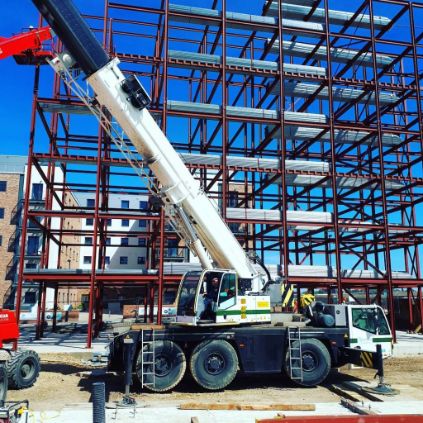
An all-terrain crane is a mobile crane that drives to site on public roads under its own power, sets up on outriggers and lifts with a telescopic boom. It combines the road speed of a truck crane with enough off-road ability to reach a lift position across rough ground, which is why it is the most common type of mobile crane on UK sites.
In short
- An all-terrain crane is road-legal, with all-wheel drive and steering on multiple axles, so it drives itself to site.
- It lifts from outriggers with a hydraulic telescopic boom, and can take extensions for extra height and reach.
- Sizes run from around 40 tonnes to over 1,000 tonnes; the larger cranes need their counterweight delivered separately.
- Every lift depends on access, ground conditions and the capacity at the radius needed, not the headline tonnage.
We supply all-terrain cranes from 40 to 1,000 tonnes for crane hire and contract lifting. This guide explains how the cranes work, how they compare with other mobile cranes and what to plan for before one arrives on site.
How an all-terrain crane works
An all-terrain crane has three parts that matter for planning: the chassis that gets it to site, the boom that does the lifting and the outriggers and counterweight that keep it stable.
A road-going chassis
The crane sits on a multi-axle carrier with all-wheel drive and all-wheel steering. Smaller cranes run on two or three axles; the largest run on nine. Steering on every axle lets a long crane turn tightly and crab sideways into position, and the suspension copes with site roads and uneven ground that would stop a standard lorry.
A telescopic boom
The main boom is made of nested sections that extend hydraulically, so the crane can go from travel mode to a long boom without assembly. Where the job needs more height or reach, a lattice jib or luffing jib can be fitted to the boom head. Extensions add reach but reduce capacity, so they are chosen as part of the lift plan.
Outriggers and counterweight
An all-terrain crane does not lift on its tyres. It sets up on outriggers, extending beams with pads that lift the crane off its wheels and spread the load into the ground. Counterweight on the back of the superstructure balances the load. Smaller cranes can carry their counterweight on the road; larger cranes travel light and have it brought in on separate lorries, then fitted on site.
All-terrain cranes compared with other mobile cranes
The right type of crane depends on the load, the access and how long the crane is needed. These are the types an all-terrain crane is most often weighed against.
Truck-mounted cranes
A truck-mounted crane also drives to site on the road, but on a chassis built for highway driving. It is quick to travel and set up on firm, level ground, but less able than an all-terrain crane to cross a rough site or manoeuvre into a tight lift position.
Rough-terrain cranes
A rough-terrain crane is built for off-road work on large sites, with big tyres and a short wheelbase. It cannot travel far on public roads, so it has to be transported to site on a low loader. They are less common in the UK, where most sites are reached by road.
Crawler cranes
A crawler crane runs on tracks and usually has a lattice boom. It arrives in pieces on several lorries and is assembled on site, which makes it better suited to long projects and very heavy lifts than to a single lift. On prepared ground, a crawler crane can move with a load on the hook.
City cranes and pick and carry cranes
For tight urban sites and work inside buildings, a compact city crane or a pick and carry crane often fits where an all-terrain crane cannot set up. Our guide What is a pick and carry crane? explains how those cranes lift and travel without outriggers.
Contact us
Get In Touch
Leave a few details and a member of our team will be in touch to talk through your project.
All-terrain crane sizes
All-terrain cranes are described by their maximum capacity in tonnes. That figure applies only at the shortest radius with the full counterweight fitted, so it is a way of naming the crane, not a measure of what it will lift on your job. As a rough guide, the sizes fall into three bands.
40 to 100 tonnes
Usually three to five axles. These cranes can often travel with some or all of their counterweight on board and set up in a compact footprint. They cover a wide range of everyday work: plant and machinery installation, roof-top units, steelwork, precast units and general site lifting.
100 to 300 tonnes
Usually five or six axles. Most need extra counterweight brought in by lorry and more space to set up and rig. They are used for heavier plant, longer reaches over buildings, larger steel and precast elements, and erecting and dismantling tower cranes.
300 to 1,000 tonnes
Six to nine axles. Counterweight, and often jib sections, arrive on a convoy of lorries, and the largest cranes may need a smaller crane on site to help rig them. They handle the heaviest single lifts and very long reaches, such as large process plant, transformers and bridge beams.
Capacity drops quickly as the radius increases, so a 60 tonne load placed 30 metres away can need a far larger crane than the weight suggests. Our guide What size crane do I need? covers how weight and radius decide the crane.
What to plan for with an all-terrain crane
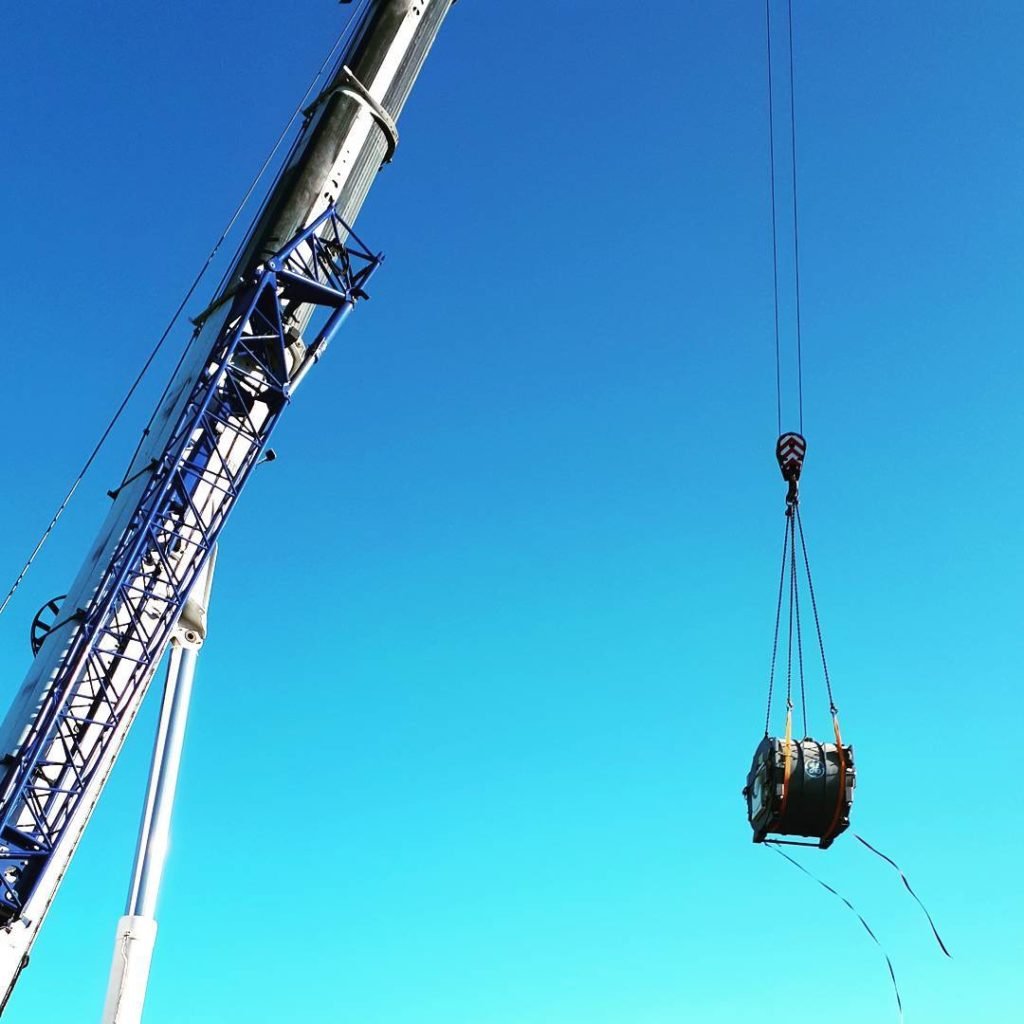
An all-terrain crane is quick to get working compared with a crane that has to be assembled, but the lift still depends on the site being ready for it. These are the checks made before any all-terrain crane lift.
Access and road travel
The route to site has to take the crane’s width, length and axle loads, including any weight-restricted bridges and tight junctions. Heavier all-terrain cranes run on UK roads under the mobile crane rules in Schedule 2 of the Road Vehicles (Authorisation of Special Types) (General) Order 2003, which sets weight categories and lower speed limits for the heaviest cranes. On site, the crane needs a firm route from the gate to the lift position.
Set-up space
Allow for the full outrigger spread, the tail swing of the counterweight as the crane slews, and room for any ballast lorries and rigging. On the larger cranes, rigging space can be as big a constraint as the lift itself.
Ground conditions
Outriggers concentrate the weight of the crane and its load into a few small areas. The ground under each pad must be able to take that load, which usually means spreader mats and information about what is below the surface: backfilled trenches, drains, cellars and buried services. BS 7121-3, the code of practice for the safe use of mobile cranes, covers crane support and ground conditions in detail.
The lift plan
Planning is a legal duty. Under regulation 8 of the Lifting Operations and Lifting Equipment Regulations 1998 (LOLER), every lifting operation must be properly planned by a competent person, appropriately supervised and carried out in a safe manner. The HSE’s LOLER guidance explains what that means in practice. The plan sets the crane configuration, the lifting accessories, the exclusion zone and the weather limits for the lift.
Wind and weather
There is no single wind limit for an all-terrain crane. It varies from crane to crane and with the size and shape of the load, because a large flat panel catches far more wind than a compact machine of the same weight. The limits for each lift are set in the lift plan and checked on the day.
Hiring an all-terrain crane
We arrange all-terrain cranes from 40 to 1,000 tonnes, matched to the load, the reach and the site. Every crane comes with a trained, carded operator, and our lifts are planned to BS 7121.
Crane hire or contract lift
You can hire the crane and operator and manage the lift yourself, or we can plan and carry out the whole lift on a contract lift basis. Our guide to crane hire or a contract lift explains who is responsible for what under each.
What we need to know
- The weight and dimensions of the load, and where its lifting points are
- Where the crane can set up and how far it is from there to the load’s final position
- The access route to site and any height, width or weight restrictions on the way
- What you know about the ground at the set-up position
Common questions
How much can an all-terrain crane lift?
All-terrain cranes range from around 40 tonnes to over 1,000 tonnes maximum capacity, and we supply them from 40 to 1,000 tonnes. What a crane can lift on your job depends on the radius and the configuration on its load chart, so the crane is chosen from the load and the reach together.
Can an all-terrain crane drive on the road?
Yes. All-terrain cranes are road-legal and drive to site under their own power. The heavier cranes travel under the mobile crane rules in the Special Types General Order, and the largest have their counterweight and extensions delivered on separate lorries.
What is the difference between an all-terrain crane and a crawler crane?
An all-terrain crane drives to site on wheels and lifts with a telescopic boom from outriggers, so it can be working soon after it arrives. A crawler crane runs on tracks, arrives in pieces and is assembled on site, which suits long projects and very heavy lifts.
Does an all-terrain crane need other vehicles on site?
Often. Larger all-terrain cranes need lorries to bring their counterweight and any jib sections, and the largest may need a smaller crane to help rig them. Space for these vehicles is part of the site plan.
Do I need a lift plan for an all-terrain crane?
Yes. LOLER requires every lifting operation to be planned by a competent person. On a contract lift we write the lift plan; on a crane hire, the hirer is responsible for planning the lift.
Get a quote for all-terrain crane hire
Call us on 0800 008 6096 or email office@synergy-lifting.co.uk. Tell us what the load is, where the crane can set up and how far it needs to reach, and we will recommend the right crane.
Find out more about our crane hire and contract lifting, lift and shift and steel erection and dismantling services.
Related guides
