

Contents
Overview
The appointed person (lifting operations) and the team below them
The appointed person (lifting operations) plans a crane lift and stays in overall charge of it, and the crane supervisor runs the lift on site. At the hook, the crane operator drives the crane and the slinger signaller rigs the load and guides the operator. A signaller or a crane coordinator joins the team when needed.
The roles and their names on this page follow BS 7121-1, the British Standard code of practice for crane lifts. The law in Great Britain names no job titles: LOLER sets the planning and supervision duty summarised below, and the standard names the people who carry it out.
In short
- Under LOLER, employers in Great Britain must see that every lifting operation is properly planned by a competent person and appropriately supervised. Northern Ireland’s own 1999 regulations set the same duty.
- BS 7121-1 gives the appointed person and the crane supervisor the authority to stop a lift. The crane operator halts at once for an emergency stop signal from anyone on site.
- On crane hire, the appointed person and the supervision come from the hirer. On a contract lift, where a lifting contractor plans and runs the lift for you, the contractor provides both.
Our crane hire and contract lifting service covers both routes: a crane with its operator for your own team to direct, or a contract lift that we plan.
At a glance
The lifting team at a glance
These are the roles BS 7121-1 describes for running a crane lift. Putting the crane up and maintaining it are separate jobs, and are left out here.
| Role | What they do | When a lift needs one |
|---|---|---|
| Appointed person | Writes the lift plan and has the final say over how the lift runs. | Every crane lift |
| Crane supervisor | Takes charge on the day and makes sure the team sticks to the appointed person’s plan. | Every crane lift |
| Crane operator | Works the crane controls, keeping to the maker’s instructions and to the method statement (the written account of how the lift is done). | Every crane lift |
| Slinger signaller | Rigs the load to the hook with the gear the lift plan names, then guides the crane by hand signals or radio. | Every lift where a load is slung to the hook |
| Signaller | Relays signals between the slinger signaller and the operator, and can be put in charge of directing the crane. | When the operator cannot see the slinger signaller |
| Crane coordinator | Sets the order of work between cranes sharing a site, so their jibs and loads keep clear of each other and of other plant. | When two or more cranes share the site |
A role is a set of duties. On a basic lift, the lowest of the three lift categories in BS 7121-1, one person can sometimes cover more than one role, as the section on combined roles below explains.
Planning
The appointed person: planning and control
The organisation that needs the lift usually nominates the appointed person, in writing, and can pick someone from outside its own staff. On a contract lift, the lifting contractor supplies one instead. Making the appointment does not hand over the organisation’s own legal duties. The training the role calls for sits in Annex A of the standard, as our guide to BS 7121-1 notes.
Writing the plan is only part of the job. Before anything is lifted, the appointed person makes sure the supervisor and the team have been briefed on the method statement. They pick the crane and the lifting accessories, meaning the slings and shackles between load and hook. They also check that the equipment is maintained and in date for its thorough examination, and that anyone who finds a defect knows how to report it.
If they think danger is likely, they can stop the job. Where the lift needs expert input, from a structural engineer or the crane supplier for example, they bring it in, and work they hand to qualified people remains their responsibility.
How the appointed person writes the lift plan, and how much detail it needs for each kind of lift, is set out in our guide What is a lift plan? In the Construction Plant Competence Scheme (CPCS), the role’s card category is A61 (Appointed Person – Lifting Operations).
On site
The crane supervisor: running the lift on site
The crane supervisor is the person in charge on site while the lift happens, and BS 7121-1 recommends one for every lifting operation. HSE’s guidance on lifting operations in construction expects them to direct the lift to the method statement and to be able to halt it if they judge carrying on to be dangerous.
The supervisor needs to understand every job in the team well enough to direct it. When something on site changes and the lift is no longer safe, they stop it and go back to the appointed person.
On some lifts the appointed person supervises as well, or hands the supervision to someone suitably experienced. The level of supervision follows the lift: HSE’s planning guidance says it should be proportionate to the risk, taking account of the experience of the people doing the work. The CPCS category for the role is A62 (Crane/Lifting Operations Supervisor).
At the hook
The crane operator and the signalling roles
Crane operator
The operator answers to one clearly named signaller at a time. The exception is an emergency stop: BS 7121-1 says the operator obeys it straight away, whoever gives it.
Slinger signaller
The appointed person authorises the slinger signaller for the job, and they need training in both slinging and signalling. Their work starts with checking the slings and shackles before use, and ends with unhooking the landed load and checking the gear again.
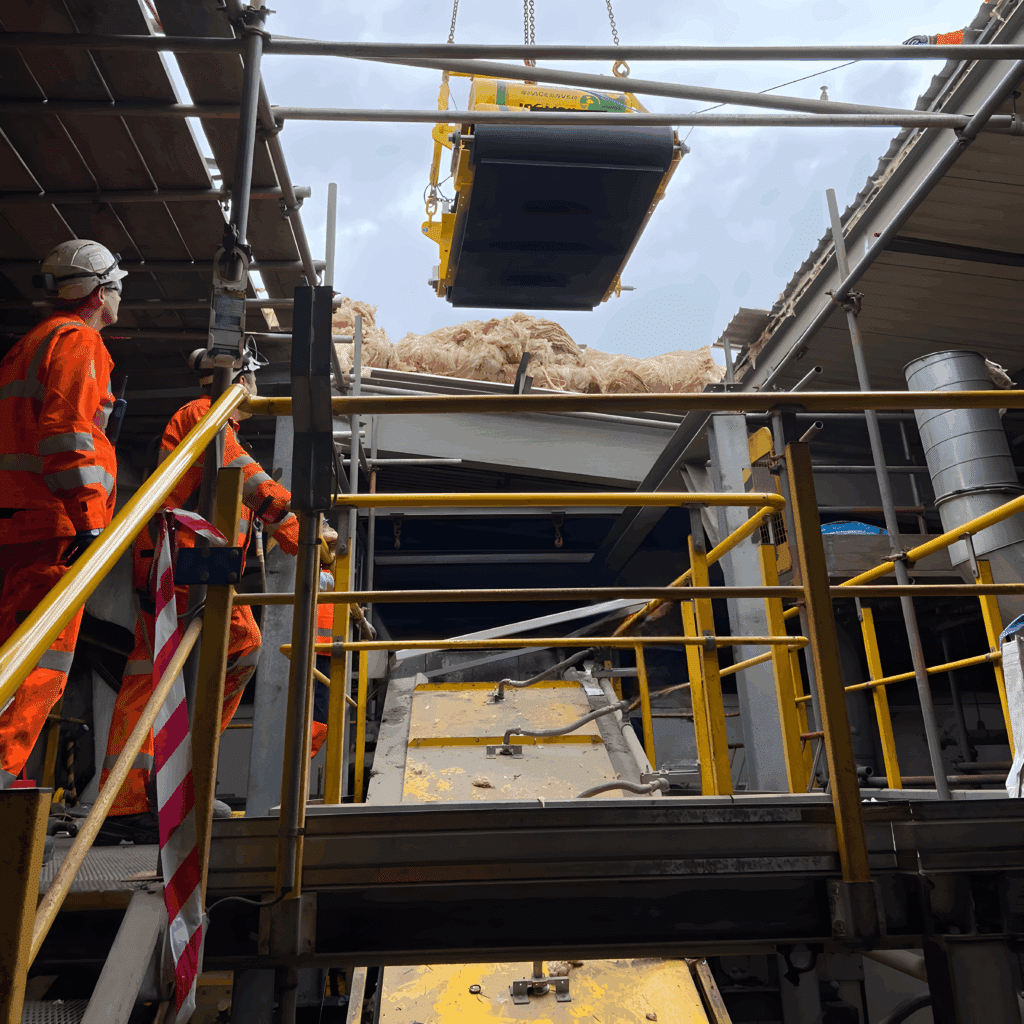
If a lift has two or more slinger signallers, only one of them gives the crane signals at any moment. In Great Britain, the Health and Safety (Safety Signs and Signals) Regulations 1996 set minimum requirements for hand signals, from start and stop to an emergency stop, and HSE asks for the signals to be standard and agreed for the lift.
Signaller
When the slinger signaller is out of the operator’s sight, a second signaller can pass the signals on, or the team can use radios or other signalling methods. If the signaller takes over directing the crane, the operator is told who now gives the signals, and the change only takes effect once the operator and the signaller have both accepted it.
More roles
Crane coordinators and combined roles
Crane coordinator
On a site where two or more cranes work, the crane coordinator decides the order of their work so that the cranes and their loads stay clear of each other and of anything else working nearby. BS 7121-1 notes that one of the crane supervisors often takes this on.
On a large construction site, BS 7121-1 has the principal contractor, the contractor in charge of the construction phase, name a single site-wide appointed person, who keeps the coordinator told of every lift. Our guide to BS 7121-1 explains how that appointment works.
One person in more than one role
Doubling up is the appointed person’s call. They look at the lift first and agree to it only where the person has the competence for every role they will cover. Basic lifts are the standard’s example of where it can work. However the work is shared out on the day, BS 7121-1 still expects an appointed person to plan every lift.
Hire or contract
Who provides each role on crane hire and on a contract lift
Who fills each role depends on how you buy the lift. When a crane is hired, responsibility for the lifting operation stays with the user unless the crane hire company explicitly takes it on as a contract lift, according to HSE. HSE adds that people who hire cranes without the competence to plan and use them safely will need a contract lift. The table shows who provides the main roles on each route, following HSE and Annex C of BS 7121-1.
| Role | Crane hire | Contract lift |
|---|---|---|
| Appointed person and lift plan | The hirer nominates the appointed person, who plans the lift. | The contractor’s appointed person, who plans the lift. |
| Crane supervisor | The hirer, as part of supervising the lift. | The contractor, which takes on supervising the lift. |
| Slinger signaller and signaller | The hirer, as part of carrying out the lift. | The contractor, which takes on carrying out the lift. |
| Crane and operator | The crane owner supplies a maintained crane with a current thorough examination report, and a competent operator. | The contractor supplies a maintained crane and a competent operator. |
| Site and ground | The hirer’s appointed person, who has the ground assessed by a competent person. | The client gives the contractor what it knows about the site and ground in writing, and the contractor’s appointed person has the ground assessed by a competent person. |

On a contract lift, our own appointed person plans the lift and writes the lift plan. When you hire a crane from us instead, we supply the crane and its operator, and your own appointed person and team run the lift. On a contract lift, BS 7121-1 also has the client give the contractor authority to work and, where needed, to instruct the client’s own staff during the lift.
The two routes, including what each costs and what you get in writing, are compared in Crane hire or contract lift: what is the difference?
From our lifts
Before the first lift we check that everyone knows who the appointed person and the crane supervisor are, and that the slinger signaller’s card covers the job. We agree who directs the crane, how signals are given and who can stop the lift. Then the team is briefed on the method statement and signs it before anything is slung.
The commonest problem on hire jobs is nobody on the client’s side taking the crane supervisor role. Our operator arrives expecting a supervisor and a slinger signaller to work to the client’s plan, and finds a site manager who thought the crane company covered both. When that happens the lift waits until a competent supervisor and slinger signaller are in place.
Decide who your appointed person is before you ring for a crane. If you have one, send us their lift plan and the names of the supervisor and slinger signaller for the day. If you have nobody, ask for a contract lift: our own appointed person plans the lift and writes the lift plan.
Questions
Common questions
What is the role of an appointed person in lifting operations?
They are the person in charge of a crane lift from start to finish, acting for the organisation that needs it. Under BS 7121-1 they approve the risk assessment and method statement and pick the crane and lifting gear. They see that the lifting team is briefed, and can stop the work if danger is likely.
Is an appointed person a legal requirement?
Not by that name. In Great Britain, regulation 8 of LOLER requires employers to have each lifting operation properly planned by a competent person and appropriately supervised. BS 7121-1, the code of practice for cranes, gives that planning to an appointed person. Our BS 7121-1 guide explains how HSE and the courts treat the standard.
What is the role of a crane supervisor?
To run the lift while it happens and keep everyone working to the appointed person’s plan. In Great Britain, HSE guidance says the supervisor should be competent and trained, and able to stop the lift if continuing looks dangerous. BS 7121-1 recommends a crane supervisor on every crane lift.
What is the difference between an appointed person and a crane supervisor?
The appointed person plans the lift and holds overall control of it, and for a basic lift can plan from information sent to them or send someone competent to see the site. The crane supervisor is there during the lift, making sure the team follows the plan. Both of them can stop the work.
What is a slinger signaller?
The person on a crane lift who connects the load to the crane and guides the operator. Under BS 7121-1, a slinger signaller checks the lifting accessories and slings the load as the lift plan sets out, then guides the crane by hand signals or radio until the load is landed and unhooked.
What qualifications do you need to be a slinger signaller?
In Great Britain, HSE says people who sling loads and direct lifts must be trained and competent, and names no particular card. Many hold one from CPCS, whose slinger/signaller category is A40, or from NPORS (the National Plant Operators Registration Scheme). The employer still judges competence for the job, as our BS ISO 15513 guide explains.
Is a slinger signaller the same as a banksman?
Not in HSE’s terms. HSE describes signallers as operatives trained to direct crane drivers during lifting operations, and banksmen as operatives who direct vehicles moving on or around a site, also called traffic marshals. If a site calls its crane signaller a banksman, check that the person is trained and authorised to signal for cranes.
Who supplies the lifting team when you hire a crane?
The hirer does. In Great Britain, HSE guidance leaves responsibility for a hired crane’s lift with the hirer unless a contract lift is agreed, so the hirer’s appointed person plans it and the hirer’s own people supervise and sling it. The crane owner supplies a maintained crane and a competent operator, under BS 7121-1.
Get help
Talk to us about who runs your lift
Call us on 0800 008 6096 or email office@synergy-lifting.co.uk. Send us the weight of the load and where it has to go. If you have an appointed person of your own, say so, and we will quote for crane hire or a contract lift to suit.
Find out more about our crane hire and contract lifting service, or our lift and shift service for moving heavy items into and out of buildings.
Related
Find out more
Get a quote
Ready for a quote?
Send us the details and we will come back with a quote, usually the same day for a desktop survey.
Or call 0800 008 6096