

Contents
Overview
What BS 7121 is
BS 7121 is the British Standard series of codes of practice for the safe use of cranes in the UK. It comes in separate parts: a general part and one for each main crane type, plus a 2 series on keeping cranes in safe working order.
In short
- BS 7121-1 and the part for the crane type apply to most lifts.
- Inspection and maintenance follow Part 2-1 together with the sub-part for that crane.
- LOLER and PUWER set the legal duties, and BS 7121 sets out good practice for meeting them.
- BSI has Part 1 under review, and the other main parts are due to follow.
| Series title | Code of practice for the safe use of cranes |
|---|---|
| Reference | BS 7121, published in separate parts |
| Current parts | 1, 2-1, 2-3, 2-4, 2-5, 2-7, 2-9, 3, 4, 5, 7, 11, 13 and 14 |
| Publisher | BSI |
| Committee | BSI committee MHE/3/11, Crane safety and testing |
| Legal status | British Standard codes of practice. Their recommendations are not law. |
| Intended for | Anyone who uses, owns or maintains cranes in the UK |
Parts
Which part of BS 7121 covers which crane
Each row gives the part for planning and using that crane, then the 2 series sub-part for inspecting and maintaining it.
| Cranes in general | Use: BS 7121-1. Inspection: BS 7121-2-1. |
|---|---|
| Mobile cranes | Use: BS 7121-3. Inspection: BS 7121-2-3. |
| Lorry loaders | Use: BS 7121-4. Inspection: BS 7121-2-4:2025, which covers all loader cranes. |
| Tower cranes | Use: BS 7121-5. Inspection: BS 7121-2-5. |
| Bridge and gantry cranes | Use: BS 7121-7. Inspection: BS 7121-2-7. |
| Hydraulic gantries (jacking gantries) | Use: BS 7121-13, which also covers their examination. No 2 series sub-part. |
| Offshore cranes | Use: BS 7121-11, from 1998. Inspection: BS 7121-2-11, proposed. |
| Cargo and container cranes | No use part. Inspection: BS 7121-2-9, for ports and inland terminals. |
| Side boom pipelayers | Use: BS 7121-14, from 2005 and under review. No 2 series sub-part. |
Each 2 series number matches the crane type’s number in the series, so Part 3 pairs with 2-3 and Part 7 with 2-7. Part 9 was planned for container handling cranes but never published, which is why those cranes have only 2-9.
Using the series
How the parts fit together on a lift
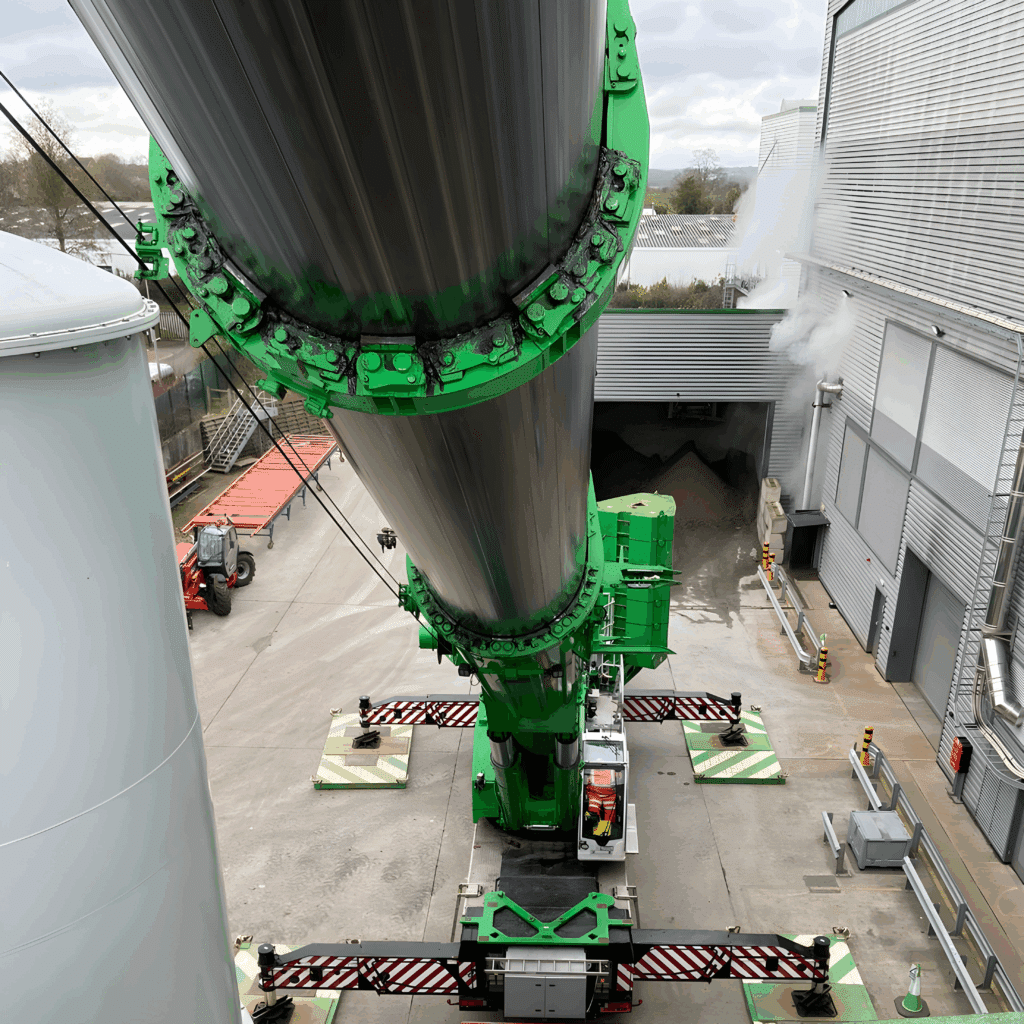
Part 1 applies to every crane lift. The part for the crane type adds what is particular to that machine, from ground conditions for a mobile crane to erection and climbing for a tower crane. Our guides to each part cover the detail.
Product standards set out how a new crane must be built: BS EN 13000 for mobile cranes and BS EN 12999 for loader cranes. BS 7121 covers the crane once it is on site and working.
Gaps
Withdrawn parts and gaps in the numbering
Some numbers are missing from BSI’s listing of the series, and two parts have been withdrawn:
| Parts 6, 8, 9 and 10 | Planned in the foreword to BS 7121-1:2006 for derrick cranes, dockside cranes, container handling cranes and rail mounted cranes, and never published. There is no 2-6 or 2-8 either. |
|---|---|
| Part 2-2 | Not in BSI’s listing. |
| Part 2 | BS 7121-2:2003, a single part on inspection and testing, withdrawn on 31 July 2013 as the 2 series took its place. |
| Part 12 | BS 7121-12:1999, on recovery vehicles and equipment, withdrawn on 24 June 2026 with no replacement named. |
The law
How BS 7121 relates to LOLER and PUWER
The legal duties come from the Lifting Operations and Lifting Equipment Regulations 1998 (LOLER). Regulation 8 requires every lifting operation to be properly planned by a competent person and appropriately supervised, and regulation 9 covers thorough examination and inspection. The Provision and Use of Work Equipment Regulations 1998 (PUWER) add the duties to maintain equipment and train the people who use it, under regulation 5 and regulation 9.
BSI says HSE and the courts use BS 7121-1 as an indicator of good practice, and HSE’s guidance on lifting operations in construction refers to it. Working to the series can help show that the law has been met. Northern Ireland has separate 1999 versions of LOLER and PUWER, enforced by HSENI and the district councils, and BS 7121 is used as good practice under them too.
Editions
The revision under way and how to get the parts
BSI Knowledge shows Part 1 under review. ALLMI, the lorry loader trade association, whose technical manager sits on the revision panel, reports that Part 1 is being revised first so the other parts can rely on it and repeat less, with Parts 3, 4, 5 and 7 to follow. ALLMI expects the work on Part 1 to continue through 2026. BSI is also consulting on a proposed sub-part, BS 7121-2-11 on the inspection of offshore cranes, which the Lifting Equipment Engineers Association (LEEA) has led. The current editions remain the ones to work to until BSI publishes replacements.
Each part is bought separately from BSI, and its page on BSI Knowledge shows whether it is current or withdrawn.
Sources and further reading
Questions
Common questions
Which part of BS 7121 do I need?
Part 1 for any crane lift, plus the part for the crane you are using: for a mobile crane, Part 3. Whoever keeps the crane in service also needs Part 2-1 and the matching sub-part.
Is BS 7121 a legal requirement?
No. It is a code of practice. LOLER and PUWER set the legal duties, in Great Britain and in their 1999 Northern Ireland versions.
Which part covers crawler and spider cranes?
Both are mobile cranes and come under BS 7121-3, with BS 7121-2-3 for their inspection and maintenance.
Related
Related services and guides
For a crane with an operator, or a lift we plan and manage to BS 7121, see our crane hire and contract lifting service, and for plant installs, our machine movement service. Call 0800 008 6096 or email office@synergy-lifting.co.uk.
Related
Find out more
Get a quote
Ready for a quote?
Send us the details and we will come back with a quote, usually the same day for a desktop survey.
Or call 0800 008 6096