

Contents
Overview
Crane site preparation: getting ready before the crane arrives
Crane site preparation is the work a site does before a mobile crane turns up. It needs a route in that takes the crane’s size and weight, a level set-up area with room for the outriggers on ground that can carry them, an exclusion zone with any permits, and a plan for delivering the load within the crane’s reach.
In Great Britain, regulation 8 of LOLER requires every lifting operation to be properly planned by a competent person, and HSE’s guidance on lifting operations in construction counts site preparation as part of the safe system of work for a crane. The plan itself is covered in our guide What is a lift plan?
In short
- Send the crane company a site plan before the crane is booked: the way in, where it can stand, what is above and below that spot, and where the load arrives.
- The CPA’s mobile crane guidance leaves the ground with the business using the crane, whether it hires one or books a contract lift.
- In Great Britain, a crane standing on a public road needs permission from that road’s authority, which sets its own notice period and may ask for more notice where the road has to close.
- HSE’s guidance GS6 covers work within 10 m of an overhead power line, measured at ground level from below the nearest wire, and its first step is to keep the crane work away from the line.
Our crane hire and contract lifting service supplies the crane and its operator. On a contract lift, our own appointed person plans the lift and writes the lift plan.
Access
The route in from the road
A mobile crane drives to site on its own wheels. In Great Britain, heavier mobile cranes use the road under the Special Types General Order, whose crane categories are set by axle weight and gross weight, so a road route has to take the crane’s weight as well as its size. The crane company plans the journey by road. For the last stretch, the CPA’s Guidance on the Supply, Management and Operation of Mobile Cranes has the hirer give the crane supplier the site layout and the height of structures and obstacles.
Weight on the site route
Site roads and yards carry the crane’s full weight through its tyres. As one maker’s example, Liebherr’s spec sheet for the LTM 1060-3.1, a three-axle all-terrain crane in our crane library, gives it a total weight of 36 t with 5.5 t of counterweight on board, which puts 12 t on each axle. Larger all-terrain cranes run on more axles and can have their counterweight brought on separate lorries, which need a way in as well, as our guide What is an all-terrain crane? explains.
Gates and headroom
Measure the gate width and any tight corners on the way in, and check the headroom under height barriers, canopies, pipe bridges, trees and cables. On a tight site a city crane can help: city cranes steer tightly, and many are built low to pass under height restrictions, as our guide What is a city crane? describes. For comparison, that Liebherr sheet lists the all-terrain LTM 1060-3.1 at 2.55 m wide and 3.75 m high on its standard 385/95 R 25 (14.00 R 25) tyres. Where the route passes under an overhead power line, plan the crossing as set out in the power lines section below.
Set-up area
The set-up area: outrigger space and the ground below
A mobile crane lifts standing on its outriggers, the legs it extends and sets down so that it stands stable, and the set-up area has to have room for them. The same sheet shows the LTM 1060-3.1’s outriggers at a full spread of 6.3 m across, with the front and rear pads just over 7.3 m apart, so the spread is more than twice the crane’s width. Allow room as well for the counterweight to swing round as the crane slews (turns), and for any lorries bringing counterweight to a larger crane. The ground should be firm and level across the whole spread.
The spread also changes what the crane can lift. A crane can set up on a shorter spread where its maker gives a load chart for it, with lower capacities than on the full spread. That is how a crane fits beside a building or into one lane of a road, so tell the crane company early if space is tight. Reading those charts is covered in our separate guide How to Read a Crane Load Chart.
Ground and mats
Each outrigger presses into the ground through a small pad, so the ground has to be checked against the crane’s outrigger loads before the lift. Under CPA guidance, assessing and preparing the ground stays with the crane user, whichever way the crane is booked. On our contract lifts, we send the site our outrigger loads, mat details and ground bearing pressure calculations. The site’s own competent person then confirms the ground can take them, because the site knows what lies beneath it, such as buried services, cellars, voids or built-up ground. Mats and ground bearing pressure have their own guide, What Size Outrigger Mats Do I Need?
Buried services
HSE’s guidance on planning lifting operations names buried services, such as drains and sewers, among the hazards to avoid when positioning the crane, along with trenches and excavations close to it. CPA guidance treats knowledge of buried services and underground structures as essential when placing the crane and any lorries or support cranes that come with it. Mark what you know on the site plan, from drawings and service searches to manhole covers and patched trench lines.
The figures above are one maker’s examples. Use the figures and instructions for the crane on your own job, from its maker, and have the lift planned by a competent person.
Power lines
Overhead power lines
Overhead lines are among the hazards HSE names in its planning guidance. In Great Britain, HSE’s guidance GS6, Avoiding danger from overhead power lines, asks for the risks to be managed wherever work is planned within 10 m of the nearest wire, measured horizontally at ground level from below it. GS6 also warns that electricity can arc across a gap, so a crane boom close to a line is a danger before it touches. Assume every line is live until its owner says it is not. GS6 starts with these steps:
- Keep the work away from the line if the lift can be done another way, for example from a different crane position.
- Ask the line’s owner whether it can be diverted, or switched off while the crane is there.
- If it stays live, plan the lift so the crane and load keep a safe clearance, based on how high the wires are and their voltage. The line’s owner can advise on the distance.
Where nothing passes under the line, GS6 describes ground-level barriers 6 m either side of the nearest wire, with high-level markers above them where cranes work. Vehicles that must cross beneath the line need a marked passage, which GS6 describes with goalposts of a non-conducting material showing the clearance height. Our guide to HSE GS6 covers the rest, including what to do if a machine touches a line. On construction sites in Great Britain, regulation 25 of the Construction (Design and Management) Regulations 2015 also says overhead cables must be routed away from the area of risk, or the supply cut off and, if necessary, earthed. If neither is reasonably practicable, it calls for warning notices plus barriers, suspended protection or measures giving the same protection.
Cranes near an aerodrome
Height matters near airfields too. Under the Civil Aviation Authority’s current notification rules, a crane within 6 km of an aerodrome that rises more than 10 m above ground, or above the buildings and trees around it where they are taller, is notified in advance under the CAA’s process. Our guide to CAA CAP 1096 explains the steps, which apply to a mobile crane on a one-day lift as well as a tower crane.
Permits
Exclusion zone, permits, road closures and neighbours
The exclusion zone
The lift plan sets out where people are kept back while the crane works. HSE’s planning guidance asks you to avoid holding loads above occupied areas where you can, and to restrict access to the ground under any load left hanging for a significant time. CPA guidance also asks for others affected by the lift, such as members of the public, to be given suitable protection. Mark the zone on the site plan you send, so the barriers and any diversion of site traffic are agreed before the day.
Site permits
Where a site runs its own permit to work for crane lifts or for entry to restricted areas, tell the crane company about its rules when you ask for a quote. We work on permit-controlled chemical and process sites, where vetting and inductions are completed and permits issued before the crane arrives.
Cranes on the public road
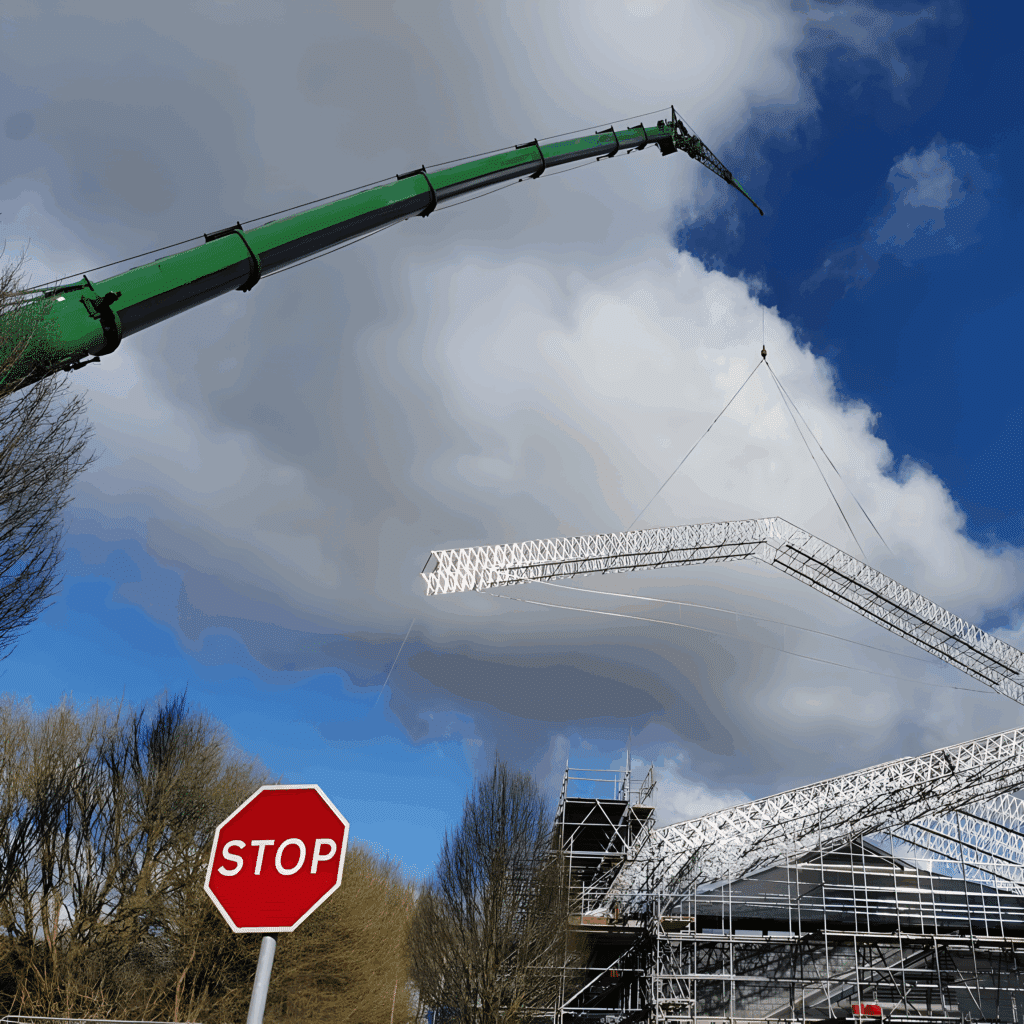
A crane that stands on the public road or pavement needs permission from the authority responsible for that road. In England and Wales that is the highway authority: the county, unitary or metropolitan council, with National Highways in England and the Welsh Government in Wales responsible for motorways and trunk roads. West Sussex County Council, for example, asks for a crane permit or licence to place a mobile crane on the highway or oversail it, and in Wales Conwy County Borough Council issues permits for a crane on or oversailing the highway under the Highways Act 1980. In London, Transport for London licenses cranes on its red routes, and the borough council or the City of London Corporation deals with other roads. In Scotland the council grants permission as the local roads authority, which Highland Council does under section 58 of the Roads (Scotland) Act 1984, and trunk roads are the Scottish Ministers’ responsibility.
Notice periods and conditions differ from one authority to the next: West Sussex asks for at least 7 working days, or 6 weeks if the road has to close. In Great Britain, a road is closed for works by a temporary order or notice from its traffic authority under section 14 of the Road Traffic Regulation Act 1984. CPA guidance leaves the organisation employing the crane to decide who deals with the authority, and says the crane supplier usually organises the closure. Whoever is agreed for the job makes the application: sometimes that is us, and sometimes it is our client or their own client. Our traffic management and road closures service can apply for the permits and manage the traffic while the crane is there.
Neighbours
A crane’s boom or load can swing over land you do not own. CPA guidance lists oversailing of boundaries, and whether a party wall agreement is needed, among the points the hirer should consider and pass to the crane supplier, along with any local restrictions on oversailing. Over a public road, check whether the authority’s permit or licence covers oversailing: Transport for London, for example, issues a separate oversail licence. Over a neighbour’s property, agree it with the owner before the lift date.
Neighbours can also lose parking and access while the crane is there, so tell them the date and times in advance. Before a road closure, our traffic management team can carry out letter drops and put up advance warning notices.
The load
Delivery of the load
The load has to arrive where the crane can reach it. Radius is the horizontal distance from the centre of the crane’s slew ring to the load’s centre of gravity, measured at the furthest point the load reaches, as our guide What size crane do I need? defines it. A delivery lorry parked further out than planned can put the pick beyond what the crane can lift at that radius. Agree where the lorry stands to unload, and keep that space clear on the day.
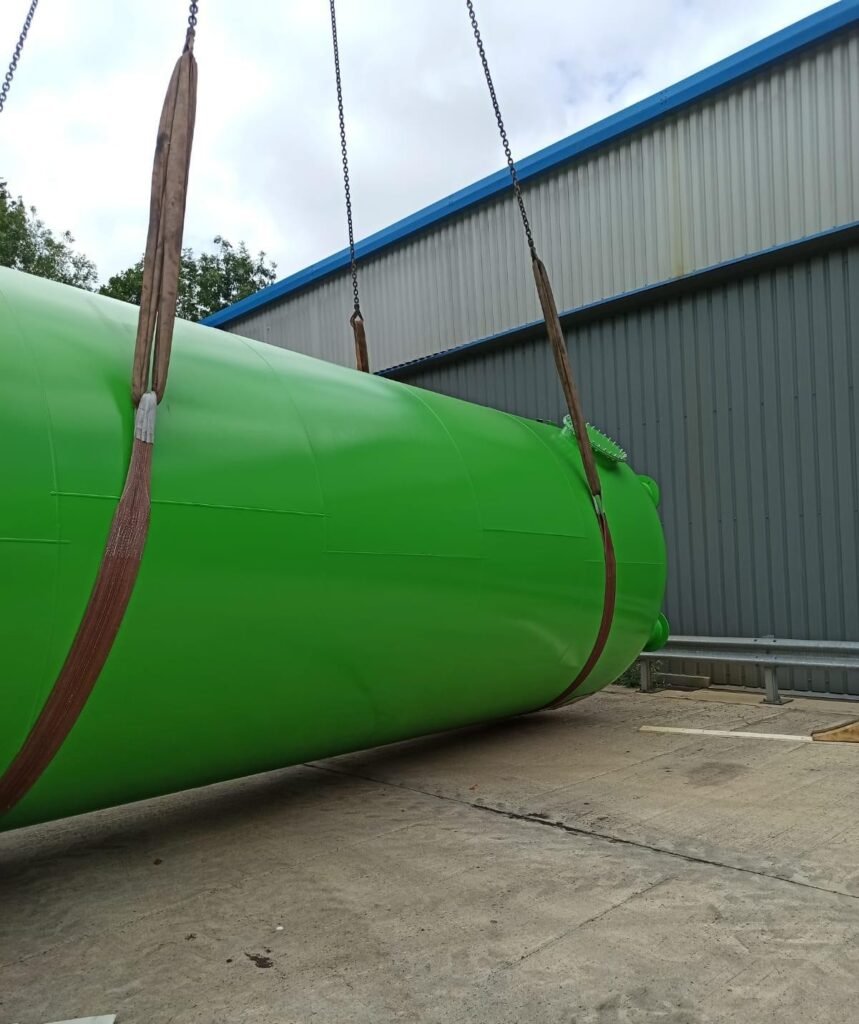
CPA guidance lists the unloading bay locations among the site details the hirer passes to the crane supplier, together with information on the load, including its weight and its centre of gravity. Those figures come from the maker or supplier of the load. Time the delivery so the crane is set up and ready when the lorry arrives, and so the lorry is not left waiting on the road outside.
What to send
What to send the crane company
CPA guidance says planning a lift should always include a visit to the place where it will happen, so hazards above and below ground can be assessed. Before that visit, the details below let the crane company choose a crane and quote from a desktop survey (from your drawings and photos).

| Send | What it tells the crane company |
|---|---|
| A site plan with the route in | Gate widths, tight corners, headroom and the surface from the road to the set-up position. |
| The set-up position | Whether there is room for the outrigger spread the lift needs and the slew, and what lies above and below it. |
| Ground and services | What you know of drains, chambers, voids and filled trenches, from drawings or a service search. |
| Overhead hazards | Power lines and their owner if known, plus trees, canopies and nearby buildings. |
| Road and neighbours | Whether the crane needs the public road, or will swing over a road or a neighbour’s land. |
| The load | Its weight, centre of gravity and lifting points, and where the delivery lorry will stand. |
| Site rules | Permits, inductions and working hours. |
Add photos of the way in from the road and of the spot where the crane would stand. On crane hire, where your own appointed person plans the lift, the lift plan should cover each of these points.
From our lifts
We start with the way in: gate width, corners, headroom and what the crane drives over to reach its spot. Then the set-up position itself, with room for the full outrigger spread and the slew. We look up for power lines and trees, and ask what’s underground. If any of that is unclear from photos, we visit.
The set-up spot isn’t clear. A skip, a parked van or a stack of materials sits where the outriggers go, or a delivery lorry blocks the gate. The other one is a gate or barrier lower than anyone measured. The crane waits until it’s sorted, and if the position has to change, the appointed person checks the plan again.
Walk the route from the road to the crane position with a tape and a phone. Measure the gate, take photos of every corner and anything overhead, and photograph the set-up spot from four sides. Send those with the site plan. It takes half an hour and it answers our first questions before we quote.
Questions
Common questions
How do cranes get to construction sites?
Wheeled mobile cranes drive there under their own power. In Great Britain, the heavier ones are allowed on the road under the Special Types General Order. Crawler cranes and tower cranes arrive in pieces on lorries and are assembled on site, and large mobile cranes have counterweight brought separately, so the site needs room for those lorries.
How much space does a mobile crane need to set up?
Enough for the outrigger spread the lift needs, plus room for the counterweight to swing as the crane slews. As one maker’s example, Liebherr gives its LTM 1060-3.1 a full outrigger spread of 6.3 m across and just over 7.3 m from front to rear. Larger cranes need more, so check the maker’s figures.
Who applies for a crane permit or road closure?
The organisation employing the crane decides who deals with the road’s authority, CPA guidance says, and the crane supplier usually arranges any closure. Whoever applies has to allow for the authority’s notice: West Sussex, for example, asks for at least 7 working days, or 6 weeks with a closure. Our traffic management service can arrange both.
How close can a crane work to overhead power lines?
In Great Britain, HSE’s guidance GS6 gives no single safe distance. It asks for risks within 10 m of a line, measured at ground level, to be managed: first by keeping work away from the line, then by asking its owner about diverting or switching it off. If it stays live, its owner can advise on clearance.
What is an exclusion zone for a crane lift?
It is the area people are kept out of while the crane works, set out in the lift plan and fenced off on site. In Great Britain, HSE asks that loads do not hang over occupied areas if this can be avoided, and that access is restricted beneath any load left suspended for a significant time.
Does a mobile crane need notifying near an airport?
It can. The Civil Aviation Authority’s current rules cover cranes standing within 6 km of an aerodrome: one that will be more than 10 m tall, or taller than nearby buildings and trees, is notified first. For a short job, allow at least 5 working days. Our guide to CAA CAP 1096 explains how.
Get help
Get help getting your site ready
Call us on 0800 008 6096 or email office@synergy-lifting.co.uk. Send us photos or a site plan showing the way in and where the crane could stand, with the weight of the load and where it has to go, and we will advise on the crane and quote for the lift.
Find out more about our crane hire and contract lifting service, or our traffic management and road closures service for cranes on the public road.
Related
Find out more
Get a quote
Ready for a quote?
Send us the details and we will come back with a quote, usually the same day for a desktop survey.
Or call 0800 008 6096