Contents
Overview
Planning a factory relocation: where to start
To plan a factory relocation, start from the date production must restart at the new site. List every machine and fixture that moves, survey both sites, set the order the machines travel in and write down who owns each task from isolation to recommissioning. Then tell customers and suppliers what changes before the move starts.
In short
- A relocation contractor can quote from a desktop survey before anyone visits site.
- Where a machine will not fit through a door, steelwork can be taken out or an opening cut in a roof or wall and reinstated afterwards, once a structural engineer and the building owner have agreed it and any asbestos has been checked.
- A machine can be dismantled to a transportable size when that is more practical than moving it whole.
- Machines you no longer need can be removed, with their scrap or resale value set against the cost of the move.
The six steps below take each part in turn. Our factory relocation service can take on the whole move, from the first survey to handover at the new site.
Step 1
Step 1: Set the restart date and work backwards
A factory relocation plan hangs off the day production has to be running again at the new site. Set that date with sales and operations, then build the programme back from it so each task gets a finish date it has to hit.
Agree the shutdown window
Your team decides how long each line can stop and at what time of year. A planned shutdown, such as Christmas or the summer break, gives a window when customers already expect lower output. If the move will not fit in one window, plan to phase it (Step 4).
Build in buffer days
A late delivery or a machine that needs more work than expected can push the programme back. A plan with no slack before the restart date has nowhere to absorb that, so leave spare days between the last move and the first production run.
Appoint one project lead
One person inside the business needs the authority to make decisions while the move is under way. Questions on a move day need quick answers, and a project lead on site can give them without waiting for the next management meeting.
How long a move takes depends on what is moving and how it is phased; our guide How long does a factory relocation take? will cover the factors.
Step 2
Step 2: Build an asset register
Start with a register of everything in the building and what happens to it. The register is the document a relocation contractor prices the move from, so record what you know about each item:
- Every machine, with its weight, dimensions, lifting points and manuals
- Tooling, jigs, spares and consumables that travel with each machine
- The services each machine needs: power, compressed air, water, extraction and data
- Racking, mezzanines, benches and other fixtures that are coming too
Mark which items go to the new site and which do not. A relocation is a good time to retire old equipment through machine removal and disposal, and a machine that has to leave before its new position is ready can wait in machine storage.
Record each machine before it is disconnected
Your engineers should photograph each machine and its connections while it is still running, and note its settings. Parts that come off for transport need labels, so they go back in the same place and the machine can be set up again without guesswork.
Step 3
Step 3: Survey both sites
Survey the old and new sites early, and measure what you can. The findings feed the lift plans and the transport, and they show where a door or a beam will get in the way.
At the old site
- Door openings, aisles and the route from each machine to the loading point
- Floor loadings along that route, including pits or suspended floors
- Where a crane or lorry can set up, and what the ground will take
- Overhead obstructions such as pipework, cable trays, crane beams and roof steel
At the new site
- Floor loadings and foundations for heavy machines
- Column spacing and headroom for the new layout
- Services at each machine position, ready before the machine arrives
- Delivery access and where vehicles can unload
Check the ground for the crane
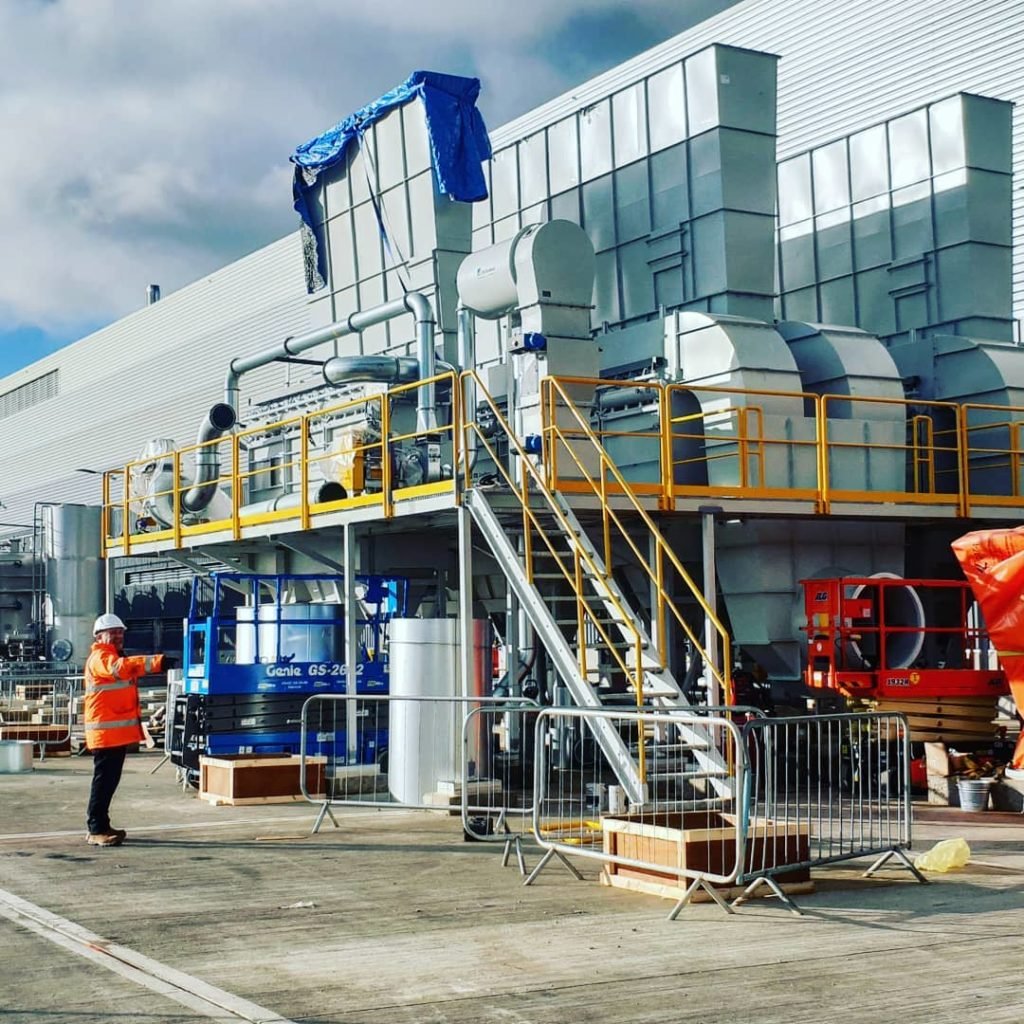
A mobile crane set up outside puts its outrigger loads into the ground, so the ground under each outrigger is part of crane site preparation. When we carry out the lift as a contract lift, we submit the outrigger loads, mat details and our ground bearing pressure calculations, and the site’s own competent person confirms the ground is suitable.
Step 4
Step 4: Plan the move sequence
With the register and surveys done, you can set the order things move in. The sequence fixes how long each line is out of action and which machines arrive at the new site first.
Phase the move or do it in one go
A single move is usually quicker overall but stops everything at once. Phasing moves one line at a time, so part of the factory keeps producing and lines come back in stages. The choice turns on how long your customers can go without output.
Put the critical machines first
Identify the machines the rest of production depends on and plan around them. Foundations and services at their new positions need to be finished before they arrive, so a machine never sits on a trailer waiting for its floor.
Plan the lifting and access
Each heavy item needs a method for leaving the old building and going back down at the new site. In Great Britain, regulation 8 of LOLER requires every lifting operation to be properly planned by a competent person, appropriately supervised and carried out in a safe manner. The duty falls on employers and on anyone who has control of the lifting equipment or the way it is used.
On a contract lift, the lift plan for each move is drawn up in house by our appointed person. Inside the building, our machine movement team moves machines on skates and jacks, or with our own electric pick and carry cranes, to where they can be loaded. If you plan to run the lifts with your own team, crane hire or a contract lift sets out how the two services differ.
Allow lead time for transport
Large machines may travel as abnormal loads. In Great Britain, the Special Types General Order makes the user of the vehicle notify the police before the journey once a load passes set widths, lengths, projections or weights (articles 12, 13, 15 and 17), and notify the road and bridge authorities on the route once it passes set total or axle weights (article 17). A load over 5 m wide also needs the Secretary of State’s written consent before it travels (article 15). Northern Ireland has its own order. Book the transport early, along with machine packaging and transport for anything fragile.
Step 5
Step 5: Agree who does what
Each task between isolating a machine at the old site and its first run at the new one needs a named owner. Agree the split with your engineers and the machine makers at survey stage. The table shows how the work is split when we are the relocation contractor.
| Task | Who owns it |
|---|---|
| Isolation, drain down and lock-off | Your mechanical and electrical (M&E) contractor |
| Refrigerant recovery | An F gas qualified technician |
| Asbestos survey and any removal | A specialist asbestos contractor, holding an HSE licence where the work is licensable |
| Mechanical disconnection and making safe | The relocation contractor, unless the survey agrees otherwise |
| Electrical and control disconnection and reconnection | Your engineers and the machine makers, coordinated with the relocation contractor |
| Lifting, moving and transport | The relocation contractor |
| Positioning, levelling and installing at the new site | The relocation contractor |
| Recommissioning | The relocation contractor, with your engineers and the machine makers |
Check whether CDM applies
A relocation can count as construction work. In Great Britain, regulation 2 of the CDM Regulations 2015 lists the dismantling of a structure, which includes fixed plant, and the installation or removal of services normally fixed within or to a structure. Where more than one contractor is, or is likely to be, working on the project, regulation 5 requires the client to appoint a principal designer and a principal contractor in writing, as soon as practicable and before the construction phase begins.
Settle asbestos and refrigerant early
Cutting an opening to get a machine out, or fixing one down at the new site, can disturb the building. In Great Britain, regulation 5 of the Control of Asbestos Regulations 2012 stops an employer starting work liable to expose its employees to asbestos, such as demolition or maintenance, until it has assessed whether asbestos is present and, if so, its type and the condition of the material it is in. Where there is doubt, the employer must assume asbestos is present, and that it is not chrysotile alone, and work to the Regulations. The government’s F gas guidance says the gas in a commercial or industrial refrigeration system must be recovered by a technician qualified to work with F gas.
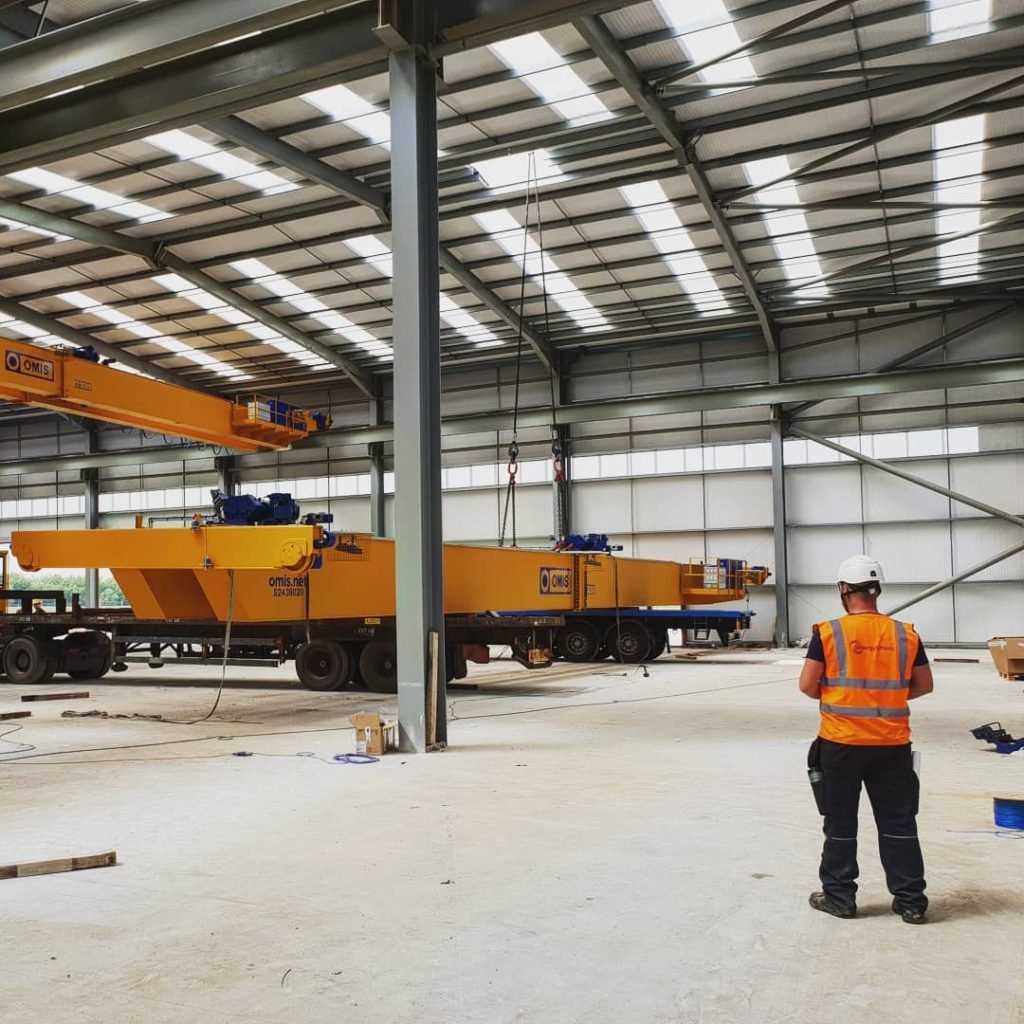
Where your sector requires equipment to be requalified or validated after a move, build that time into the programme before the restart date.
Step 6
Step 6: Plan your communications
A factory relocation affects people well outside the factory. Plan who needs telling, and when.
- Customers: warn them of any change to lead times and how orders will be covered while lines are down.
- Suppliers: confirm the change of delivery address and the date it takes effect.
- Landlords: agree access at both sites, including out-of-hours working.
- Staff: brief everyone affected on the programme and on how to report problems during the move.
- Insurers: check your cover for equipment in transit and in storage.
Questions
Common questions
What does a factory relocation involve?
A factory relocation involves four stages: planning and surveys, disconnecting and dismantling the equipment, moving it by road, then installing and commissioning it at the new site. Lifting comes in at both ends, and in Great Britain each lift has to be properly planned by a competent person.
What should a factory relocation plan include?
A factory relocation plan should include the restart date and shutdown window, a register of every machine and fixture, survey findings for both sites and the order the machines move in. It also needs a written split of who owns each task, the lift plans, the transport arrangements and a timetable for telling customers and suppliers.
How far ahead should you start planning a factory relocation?
Start as soon as a move looks likely, before the date is fixed. The longest lead items set the start: agreeing a shutdown window with customers, surveying both sites, getting foundations and services ready at the new site and, for abnormal loads, giving notice to the police and road authorities. A single machine can move at shorter notice.
Should you build stock before a factory move?
Yes, if customers cannot wait for output while the lines are stopped. Stock built ahead of the shutdown keeps orders going during the move. Size it to cover the planned shutdown plus the buffer days in the programme, and agree it with sales early, because the extra production has to fit in before the lines stop.
Does CDM apply to a factory relocation?
It can. In Great Britain, regulation 2 of CDM 2015 counts dismantling fixed plant, and installing or removing services normally fixed within or to a structure, as construction work. If there may be more than one contractor, the client must appoint a principal designer and principal contractor in writing, as soon as practicable and before the construction phase.
Do you need to notify anyone before moving machines by road?
Yes, for an abnormal load. In Great Britain, the Special Types General Order 2003 sets size and weight thresholds. Above them, the user of the vehicle must notify the police for oversize or very heavy loads, and the road and bridge authorities for heavy ones, before the journey. The widest loads also need the Secretary of State’s written consent.
Get a quote
Get help planning your factory relocation
Call us on 0800 008 6096 or email office@synergy-lifting.co.uk. Tell us what is moving and when production needs to restart. Give us both addresses and we will survey the two sites and help you build the plan.
Find out more about our factory relocation and machine movement services.
Related
Find out more
Get a quote
Ready for a quote?
Send us the details and we will come back with a quote, usually the same day for a desktop survey.
Or call 0800 008 6096