

Contents
Overview
What is a lift plan and when do you need one?
A lift plan, also called a lifting plan, is the plan a competent person makes before a load is lifted, written down in as much detail as the risk calls for. It covers the load and its weight, the lifting equipment and where it stands, the hazards and their controls, and who does what at each step.
Every lifting operation that uses lifting equipment needs one, and the risk decides how much of it goes on paper.
In short
- In Great Britain, LOLER makes planning every lifting operation with lifting equipment a legal duty, and how much of the plan is written down follows the risk.
- On a crane lift the plan is written by the appointed person, the planning role set out in the British Standard BS 7121-1. The law itself asks only for a competent person.
- On crane hire the hirer’s appointed person writes the plan. On a contract lift the contractor’s does.
Our crane hire and contract lifting service covers both ways of getting a lift done, and we plan our lifts to BS 7121.
The law
Where the duty to plan a lift comes from
In Great Britain, regulation 8 of the Lifting Operations and Lifting Equipment Regulations 1998 (LOLER) requires employers to make sure every lifting operation involving lifting equipment is properly planned by a competent person. The same regulation also requires each lift to be appropriately supervised and carried out safely.
A competent person, for planning, is someone with enough practical and theoretical knowledge and experience of the kind of lift being planned, in the words of HSE’s guidance on lifting operations in construction. The planning should be in proportion to the risk, as HSE’s guidance on planning lifting operations puts it, so a short routine lift needs far less paperwork than a lift over a building.
Northern Ireland has the same duty in regulation 8 of the Lifting Operations and Lifting Equipment Regulations (Northern Ireland) 1999. Our guide to LOLER covers the rest of the regulations, and HSE L113 is the approved code of practice for LOLER.
What it covers
What goes into a lift plan
A crane lift plan holds the risk assessment and the method statement, the step-by-step account of how the lift will be done, with drawings where the lift needs them. That is how BS 7121-1, the code of practice for using cranes safely, sets it out. The plan has to deal with the risks the risk assessment finds and say who is responsible for each part of the lift.
Grouped together, the main risks in HSE’s planning guidance and the questions in HSE’s brief guide to lifting equipment come to these parts:
| Part of the plan | What it deals with |
|---|---|
| The load | What is being lifted and the problems it brings, how heavy it is, where its centre of gravity lies, and how it is attached and secured. |
| The equipment | Checks before use, and enough capacity for the load, with a reduced rating known as derating where conditions call for it, so nothing is overloaded. |
| Where it stands | The risk of the crane or other equipment overturning, and hazards close by, such as overhead power lines and buried services like drains. |
| People nearby | Loads kept away from occupied areas where possible. Where a load stays suspended for a long time, the area below is treated as a danger zone with access restricted. |
| Visibility and conditions | What the operator can see, and the conditions the lift takes place in. |
| Roles | Who is in control of the lift, and who is responsible for each step. |
Under BS 7121-1 the method statement should record details including the weight of the load, how the crane is configured, how its outriggers are supported and the highest wind speed at which the lift can go ahead. Outriggers are the legs a mobile crane extends and sets down so that it stands stable.
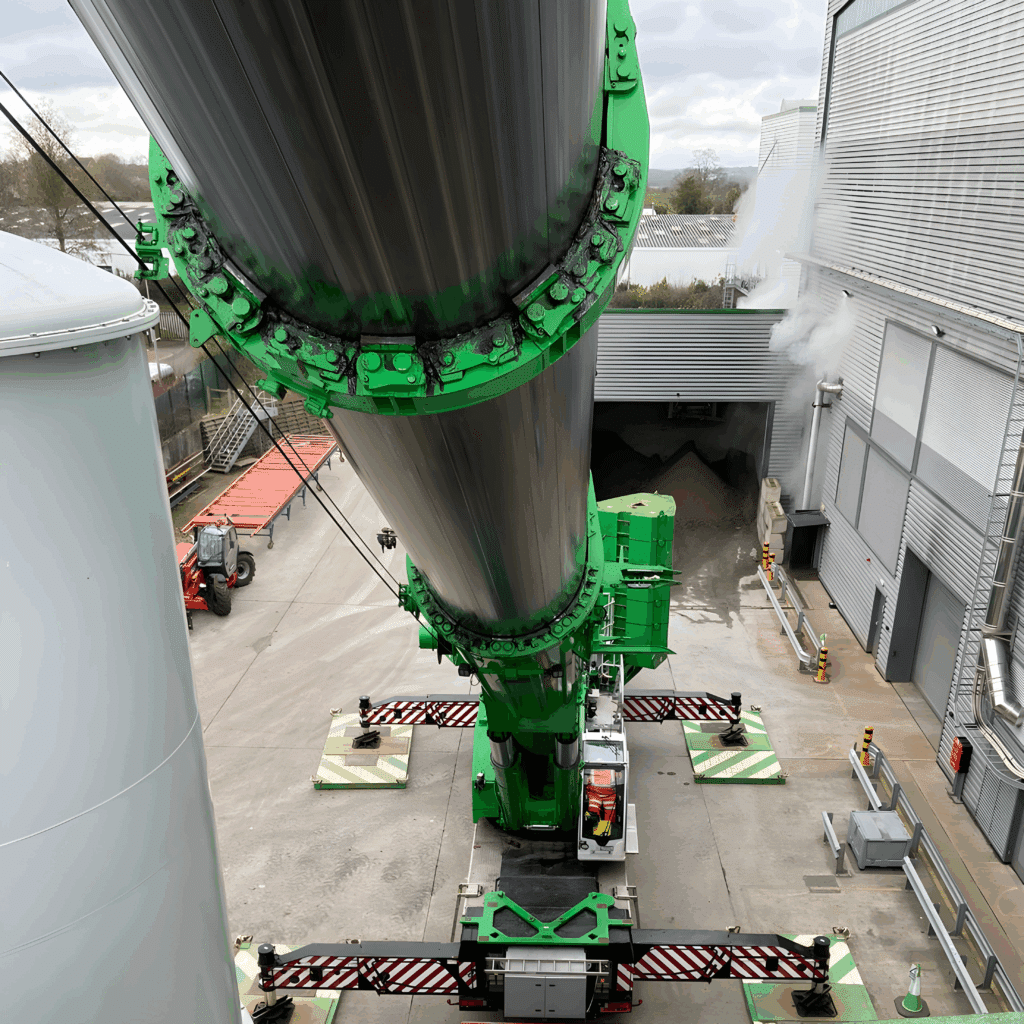
For a crane that is not permanently installed, the appointed person should have the ground assessed by a competent person, to confirm it can take the loads the crane puts through its outriggers. Choosing the crane belongs in the same plan, and working out what size crane you need starts from the load’s weight and the distance it has to travel from the crane.
Who writes it
Who writes a lift plan
On a crane lift, the appointed person is appointed in writing by the organisation that needs the lift and has overall control of the lifting operation, including the authority to stop it. They can hand tasks to other people but keep the responsibility for them. Appointing one leaves the organisation’s own legal duties in place, as our guide to BS 7121-1 explains along with the training the role needs.
On the day, the appointed person’s plan is run by a crane supervisor, who directs the lift on site, with a slinger-signaller who attaches the load and directs the crane’s movements.
Lift categories
How much detail a lift plan needs
Each crane lift falls into one of three categories under BS 7121-1, set by the hazards around the load and the site:
- Basic: the weight is known and nothing significant on site makes the lift harder. A generic lift plan can cover it while no extra hazards turn up, and a routine basic lift can be planned once with the plan reviewed from time to time.
- Intermediate: the load or the site brings significant hazards. The lift needs a risk assessment and method statement written for that site or task. This category used to be called a standard lift.
- Complex: for example lifting people, or two cranes sharing one load. The appointed person visits the site to prepare a dimensioned drawing of the crane position and the load’s path, and attends the lift.
Example
An example lift plan (a made-up job)
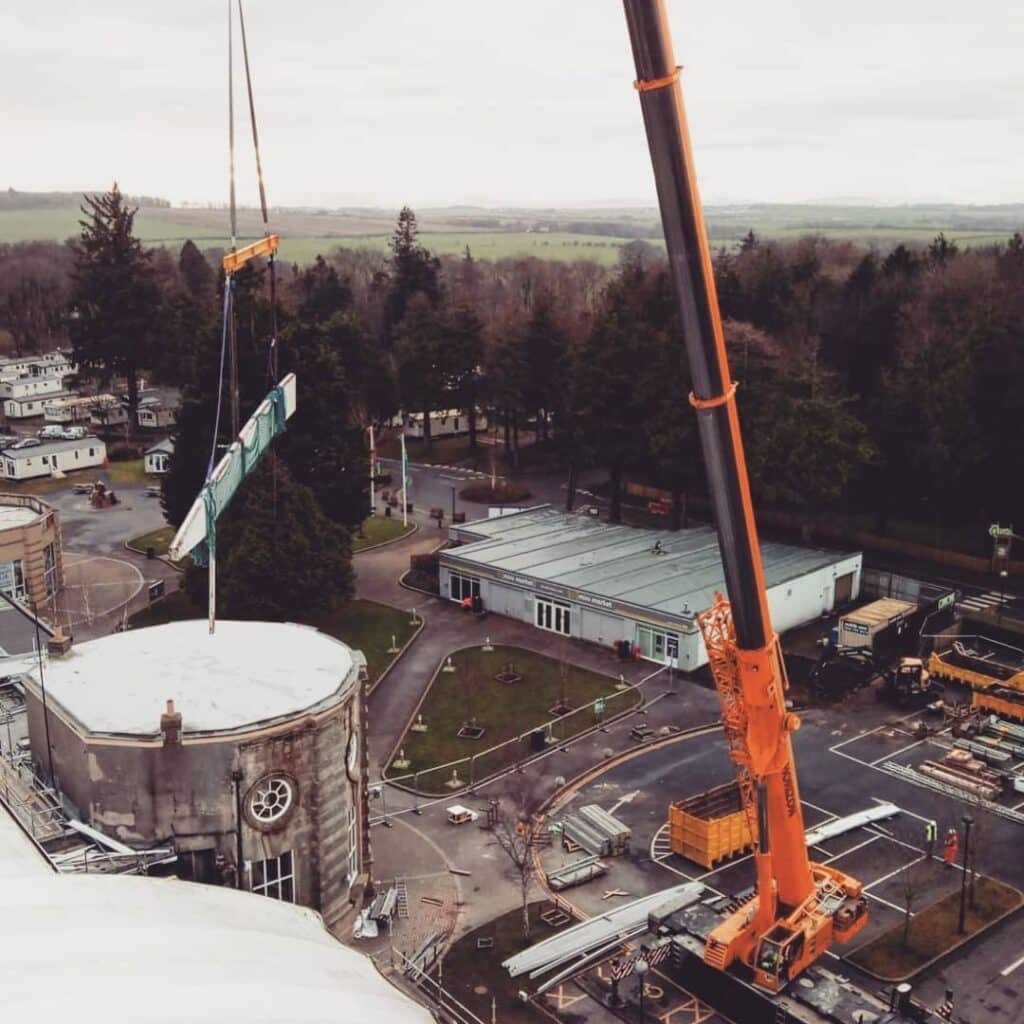
This example is for an invented job: lifting a rooftop air handling unit, the large box that moves and filters air for a building’s ventilation, from a delivery lorry onto steel supports on a factory roof with a mobile crane. Every figure is a round number for illustration.
| Part of the plan | What this example says |
|---|---|
| Job and category | One air handling unit lifted from a lorry in the yard onto roof supports. Intermediate category, because the load passes over the roof edge and over part of a staff car park. |
| The load | A 4 t unit, its weight taken from the maker’s data, with the lifting points and centre of gravity marked by the maker. The lifting gear and the crane’s hook block add 0.5 t, so the crane lifts 4.5 t in total. |
| Lifting gear | A spreader beam with four slings to the unit’s lifting points, each rated for its share of the load. |
| Crane and set-up | A mobile crane set up in the yard, working at a radius of 20 m when the unit is over the landing point. Its load chart, in the configuration used, shows more than 4.5 t at 20 m with the boom needed to clear the roof edge. |
| Ground and services | Ground assessed by a competent person for the outrigger loads, with mats under each outrigger. A buried drain is marked and the outriggers kept clear of it. |
| Overhead hazards | No overhead power lines within reach of the crane or the load, confirmed when planning. |
| Area under the load | The car park bays under the load’s path closed with barriers for the lift, so nobody is under the suspended load. |
| Wind | The highest wind speed at which the lift can go ahead, recorded in the method statement. |
| People | Appointed person: wrote the plan. Crane supervisor: runs the lift on site and can stop it. Crane operator and slinger-signaller named for the day. |
| Sequence | Set up and carry out pre-use checks. Attach to the marked lifting points. Lift and slew along the planned path, land the unit on its supports and unhook once it is secured. |
A real plan uses the load’s actual weight and the crane maker’s own figures, and the lift has to be planned by a competent person, on a crane lift the appointed person.
On the day
How the lift plan is used on site
Everyone involved in the lift must understand the method statement, under HSE’s construction guidance. Before work starts, the crane supervisor should brief the lifting team on the plan, and BS 7121-1 has each member sign to confirm they understood it.
During the lift, the crane supervisor should direct it so it follows the method statement. If carrying on would be dangerous, for example because the ground is softer than the plan allowed for, the crane supervisor should have the authority to stop the lift.
Hire or contract
Lift plans on crane hire and contract lifts
Who writes the plan depends on the route you take: hiring the crane, or having the lift run for you. When a crane is hired, responsibility for planning and running the lift stays with the user unless the hire company explicitly takes that on as a contract lift, according to HSE. On a hire, BS 7121-1 has the hirer provide the appointed person, while the crane owner supplies the crane and a competent operator.
On a contract lift, our own appointed person plans the lift and writes the lift plan. If you hire a crane from us instead, your appointed person plans the lift, and we supply the crane and its operator to work to that plan. The two routes are compared in full in Crane hire or contract lift: what is the difference?
From our lifts
We ask for the load’s weight and where that figure came from, drawings showing the lifting points and centre of gravity, and where the load is coming from and going to. We also ask what’s under and around the crane position. Where we need to see the ground, access or overhead hazards ourselves, we visit the site before the plan is written.
The commonest problem is the site not matching the plan on the day. It might be a load heavier than the paperwork said, a lorry parked where the crane needs to set up, or ground dug up since the survey. When that happens the lift stops, and the appointed person reviews the plan before anything is lifted.
Have your appointed person look at the site before you book the crane, then send us the plan, so the right crane arrives with the right counterweight and mats. The commonest delay on hire jobs is finding out on the day that the crane can’t reach or can’t set up where planned.
Questions
Common questions
Are lift plans a legal requirement?
Planning is a legal duty: in Great Britain, regulation 8 of LOLER requires employers to ensure every lifting operation with lifting equipment is properly planned by a competent person. The written plan comes from guidance. HSE guidance says complex lifts should have a written plan, and BS 7121-1, the code of practice for cranes, recommends one for every crane lift.
Who can create a lift plan?
A competent person, meaning someone whose knowledge and experience match the kind of lift being planned. For a routine lift, HSE says that can be the people doing it, such as the slinger or crane operator. A complex lift needs a planner with significant and specific competence. On any crane lift, BS 7121-1 gives the planning to the appointed person.
Do you need a lift plan for every lift?
Yes. In Great Britain, LOLER’s planning duty applies to any lift made with lifting equipment, so a lift with a hoist or a lorry loader has to be planned just as a crane lift does. How much is written down depends on the lift: HSE says the plan must match how complex and difficult the lifting operation is.
Can a routine lift use a generic lift plan?
Yes, where the lift is simple and common. HSE gives forklift trucks in a factory as the example: one generic plan, reviewed from time to time, may be all they need. A routine lift that is a little more complex may need planning each time, and a tandem lift with several cranes needs a written plan.
Does a telehandler lift need a lift plan?
Yes. In Great Britain, HSE lists telehandlers among the lifting equipment LOLER covers, and its guidance on telehandlers says that, as with all lifting equipment, work with them should be properly planned and the risks assessed. The detail follows the risk, so a simple, common telehandler job may need only a generic plan.
How do you work out which crane a lift needs?
Start from the total weight, including the hook block and lifting gear, and the radius from the crane’s slew centre to the load’s centre of gravity at its furthest position. The load chart must show enough capacity at that radius, with a boom long enough to clear the load’s path. Our guide What size crane do I need? covers it.
How does a lift plan relate to RAMS?
Under BS 7121-1, a crane lift plan contains the RAMS, short for risk assessment and method statement. The risk assessment identifies the hazards, and the method statement sets out how the lift is done to control them. On construction sites, HSE says the record of the plan is sometimes called a method statement, and everyone taking part must understand it.
What is a good lift plan?
Get help
Get help planning your lift
Call us on 0800 008 6096 or email office@synergy-lifting.co.uk. Send us the weight and size of the load, with photos or a site plan showing where the crane could stand and where the load has to go, and we will advise on the lift and quote for it.
Find out more about our crane hire and contract lifting service, or our machine delivery and installation service for lifting plant and machinery into place.
Get a quote
Ready for a quote?
Send us the details and we will come back with a quote, usually the same day for a desktop survey.
Or call 0800 008 6096