
Contents
Overview
What the LEEA Code of Practice is
The LEEA Code of Practice for the Safe Use of Lifting Equipment, known as COPSULE, is the lifting industry’s own guide to selecting, using, inspecting and examining lifting equipment, published by the Lifting Equipment Engineers Association. It is industry guidance. The legal duties come from the Lifting Operations and Lifting Equipment Regulations 1998 (LOLER) and the Provision and Use of Work Equipment Regulations 1998 (PUWER), and HSE L113 is the Approved Code of Practice for LOLER.
In short
- COPSULE is industry best practice. Following it does not replace any legal duty.
- It has a general chapter, then a chapter for each kind of equipment, from slings and shackles to hoists and vacuum lifters.
- Edition 10, from December 2025, is free online and as a PDF.
- It is written for site teams and inspectors, LEEA members or not.
| Full title | Code of Practice for the Safe Use of Lifting Equipment |
|---|---|
| Reference | COPSULE |
| Current edition | Edition 10, December 2025. It replaced edition 9.1 of January 2024. |
| Publisher | Lifting Equipment Engineers Association (LEEA) |
| Status | Current |
| Legal status | Industry code of practice. It is not approved by HSE and has no legal status of its own. |
| Northern Ireland | Not specific to any part of the UK. Edition 10 is written as guidance that applies internationally. |
Audience
Who COPSULE is for
LEEA describes edition 10 as written for supervisors, site teams, inspectors and safety compliance managers, as well as its own members. Inside, it sets out duties for designers, manufacturers, suppliers, employers, employees and competent persons.
LEEA is the trade association for the lifting industry. It began in 1944 as the London Chain Testers Association and took its present name in 1988, according to its history page.
Contents
What COPSULE covers
Chapter 1 sets out the general requirements: definitions, the legal background, selecting equipment, passing information between supplier and user, marking, storage and handling, inspection, safe use and training. Each of the 26 chapters that follow deals with one kind of equipment, among them:
- bridge, gantry and slewing jib cranes, hoists, winches, runways and beam clamps
- chain, wire rope, webbing, roundsling and fibre rope slings
- shackles, eyebolts, rigging screws, lifting beams, spreaders and frames
- jacks, mobile supporting structures, plate clamps, magnetic and vacuum lifters
The equipment chapters set out the legal requirements and how the item is marked and checked. Users check equipment before each use, and between thorough examinations by a competent person COPSULE expects interim inspections. Equipment is marked with its working load limit and an identification, and an item whose marking cannot be read should be withdrawn and passed to a competent person for re-marking.
Lifting
How COPSULE applies to lifting and machine moving
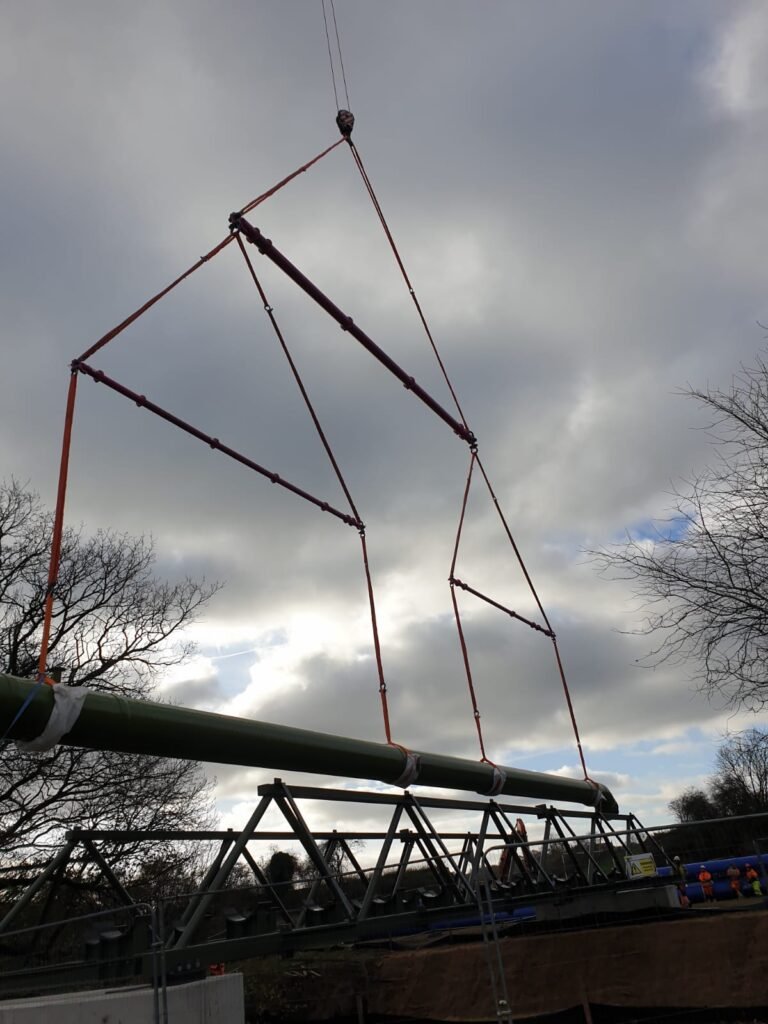
COPSULE gives equipment-by-equipment detail beyond what L113 covers. For crane hand signals it refers to the standard used in the country of work, such as BS 7121-1 in the UK. Its legal requirements sections follow the same intervals as LOLER: roundslings, for example, are thoroughly examined at least every 6 months unless a written scheme of examination sets otherwise.
For machine moves, the chapters on jacks, winches, mobile supporting structures, and lifting and pulling machines that grip a wire rope sit alongside the ones on the lifting beams and spreaders used to take a machine off its base.
The law
The legal status of COPSULE
COPSULE is LEEA’s own publication. It is not an Approved Code of Practice, so it lacks the special status in court that L113 has in Great Britain and, through HSENI’s approval, in Northern Ireland. Its foreword says nothing in it frees anyone from their legal duties, and LEEA presents following it as best practice.
The duties themselves come from LOLER and PUWER in Great Britain, and from the 1999 Northern Ireland versions of both.
Editions
Editions and how to get COPSULE
LEEA first published the code in 1981. The eighth edition of 2014 was a priced paperback of over 430 pages, and LEEA later made the ninth edition a free download. Edition 10, published in December 2025, is free to members and non-members.
LEEA’s COPSULE page has it online and as a PDF. LEEA’s reference library also holds free guidance on written schemes of examination, LEEA 032.
Sources and further reading
Questions
Common questions
What weight does the LEEA Code of Practice carry?
It is industry best practice with no legal standing of its own. The duties come from LOLER and PUWER in Great Britain and their 1999 equivalents in Northern Ireland.
What cranes does COPSULE cover?
Bridge, gantry and slewing jib cranes, which have their own chapters. Mobile and tower cranes have no chapter of their own.
Who can get a copy of COPSULE?
Anyone, member or not, from LEEA’s website.
Related
Related services and guides
For lifts that need rigging and lifting accessories supplied and planned, see our crane hire and contract lifting and machine movement services. Call 0800 008 6096 or email office@synergy-lifting.co.uk.
Related
Find out more
Get a quote
Ready for a quote?
Send us the details and we will come back with a quote, usually the same day for a desktop survey.
Or call 0800 008 6096