

Contents
Overview
What COSHH, the Control of Substances Hazardous to Health Regulations 2002, covers
The Control of Substances Hazardous to Health Regulations 2002, known as COSHH, cover chemicals, fumes, dusts and other substances that can harm people’s health at work. They set out how an employer assesses the risk and keeps exposure under control.
In short
- Before work that could expose employees, the employer assesses the risk and puts the steps it calls for in place.
- Exposure is prevented or, where that is not reasonably practicable, adequately controlled. PPE comes last, alongside other measures.
- No limit in EH40, HSE‘s list of workplace exposure limits, may be exceeded.
- Local exhaust ventilation (LEV) is thoroughly examined and tested at least every 14 months.
| Full title | Control of Substances Hazardous to Health Regulations 2002 |
|---|---|
| Reference | SI 2002/2677 |
| Current version | The Regulations as amended. legislation.gov.uk lists no outstanding changes to the revised text. |
| Publisher | The National Archives, on legislation.gov.uk |
| Status | In force |
| Legal status | Regulations made under the Health and Safety at Work etc. Act 1974 and the European Communities Act 1972, with an Approved Code of Practice (L5). Contravening them is a criminal offence. |
| Extent | Great Britain |
| Northern Ireland | Control of Substances Hazardous to Health Regulations (Northern Ireland) 2003 |
Duty holders
Who has duties under the Regulations
Employers owe the duties to their employees and, so far as is reasonably practicable, to anyone else who may be affected by their work (regulation 3). Health surveillance is owed to employees only, and several other duties, including monitoring, apply to other people only while they are on the premises where the work is done.
A self-employed person has the duties of both an employer and an employee, apart from monitoring and health surveillance. The employer takes all reasonable steps to see control measures are properly used, and employees make full and proper use of them (regulation 8). Where relevant, they take reasonable steps to return them to storage and report defects at once.
Requirements
What the Regulations require
Assessment
Before any work that could expose employees to a substance hazardous to health, the employer makes a suitable and sufficient assessment of the risk and puts the steps it identifies in place (regulation 6). The employer reviews it regularly, and at once if it may have stopped being valid, if the work changes significantly, or if monitoring results show a review is needed.
Prevention and control
Under regulation 7, the employer prevents exposure or, where that is not reasonably practicable, controls it adequately. The measures come in this order:
| Substitute | So far as is reasonably practicable, replace the substance with a safer substance or process. This is the preferred option. |
|---|---|
| Engineering controls | Design and use suitable work processes, systems, equipment and materials. |
| Control at source | Control exposure where it arises, including adequate ventilation and organisational measures. |
| PPE | Where the other measures cannot achieve adequate control, provide suitable PPE in addition to them. |
Keeping controls working
- Maintenance and testing (regulation 9): the employer keeps control measures in efficient working order and in a clean condition. The employer has LEV thoroughly examined and tested at least every 14 months, and monthly for some Schedule 4 processes such as blasting metal castings. Non-disposable respiratory protective equipment (RPE) is thoroughly examined and, where appropriate, tested at suitable intervals. Records of the examinations, tests and any resulting repairs, or a suitable summary, are kept for at least five years.
- Monitoring (regulation 10): the employer measures exposure where the assessment shows it is needed.
- Health surveillance (regulation 11): where it is appropriate, the employer puts employees under health surveillance and keeps their health records for at least 40 years.
- Information and emergencies (regulations 12 and 13): employees get suitable and sufficient information, instruction and training. The employer also has procedures ready for accidents, incidents and emergencies involving the substances, unless the assessment shows only a slight risk, because of the small quantities present, and the controls already in place are enough to control it.
Lifting
How the Regulations apply to lifting and machine moving
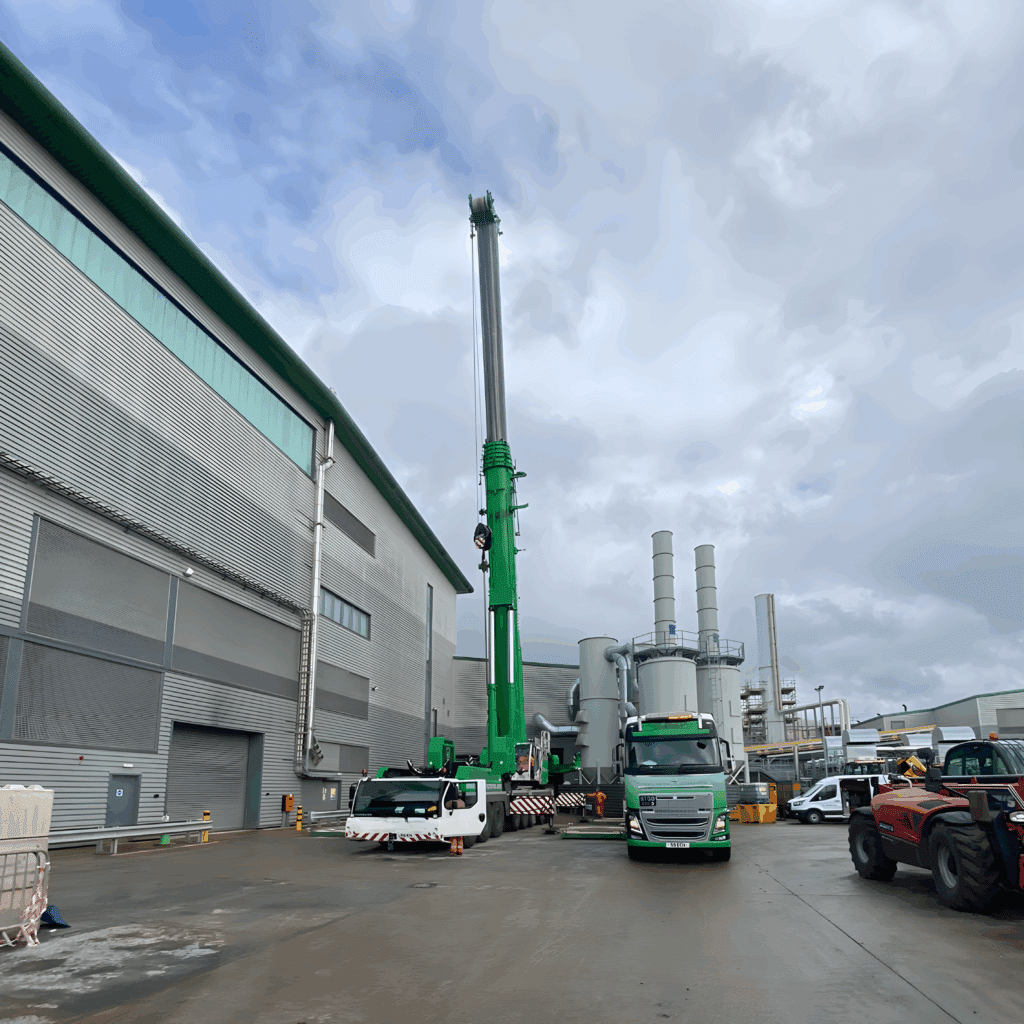
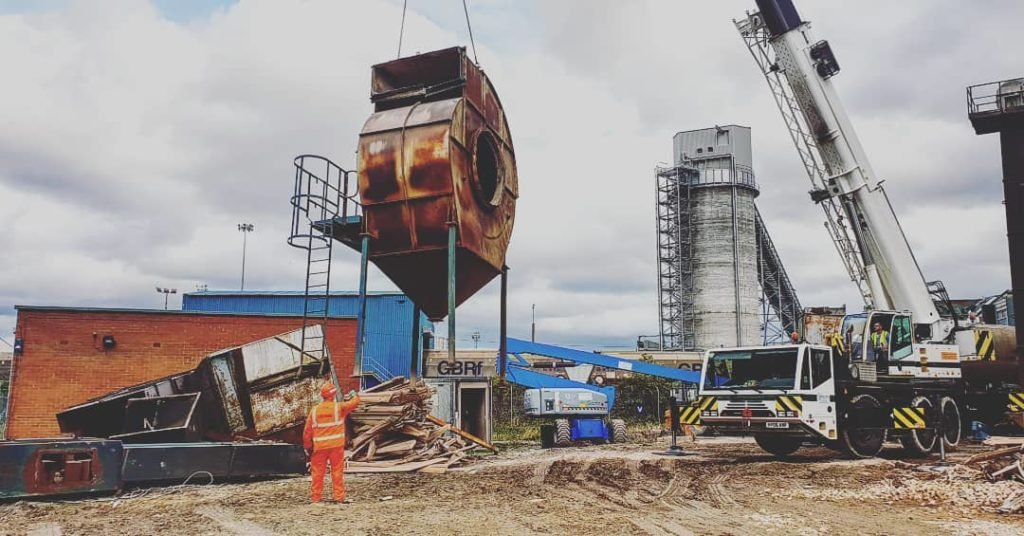
On a lift or machine move, the crew can breathe exhaust from the plant, and dust or fume from the work around the move, such as preparing a floor or freeing a machine from its base.
- Diesel exhaust: repeated exposure to diesel fumes over about 20 years may increase the risk of lung cancer, according to HSE’s leaflet Diesel engine exhaust emissions (INDG286). Its controls include turning engines off when they are not needed and ventilating the work area, with RPE as a last resort.
- Concrete dust: cutting or chasing concrete gives off silica dust. HSE’s guidance on chasing concrete sets out on-tool extraction with RPE of assigned protection factor 20, and EH40 limits respirable crystalline silica to 0.1 mg/m³ over 8 hours.
- Welding fume: all welding fume, mild steel included, can cause lung cancer. HSE’s 2019 safety alert expects engineering controls such as LEV for welding indoors.
- Oils and greases: HSE’s skin guidance says these can cause irritant contact dermatitis, and unrefined mineral oils can cause skin cancer.
- Substances already on site: where a crew works on someone else’s premises, the host employer must tell the crew’s employer about the risks there, as the Management of Health and Safety at Work Regulations 1999 require.
Definitions
Key definitions
- Substance hazardous to health: a substance or mixture that meets the criteria for a CLP health hazard class, has an HSE-approved workplace exposure limit, is a biological agent, is dust at or above 10 mg/m³ inhalable or 4 mg/m³ respirable (8-hour average), or otherwise creates a risk to health because of its chemical or toxicological properties and how it is used or present at work (regulation 2).
- Workplace exposure limit: the limit HSE approves for a substance over a set reference period, published in EH40/2005 Workplace exposure limits.
- Adequate control: control in which the principles of good practice in Schedule 2A, such as minimising the release and spread of substances and using PPE only in combination with other measures, are applied and no workplace exposure limit is exceeded. For carcinogens, mutagens and substances that can cause asthma, exposure is also reduced to as low a level as is reasonably practicable.
- CLP Regulation: the rules on classifying, labelling and packaging chemicals, Regulation (EC) No 1272/2008, as it now applies in Great Britain.
Enforcement
Enforcement and penalties
Enforcement of COSHH falls to HSE or the local council, depending on the workplace. Breaking COSHH is a criminal offence in Great Britain under section 33 of the Health and Safety at Work etc. Act 1974; our guide to that Act covers notices and penalties. In Scotland, the Crown Office and Procurator Fiscal Service decides whether to prosecute.
The Control of Substances Hazardous to Health Regulations (Northern Ireland) 2003 (SR 2003/34) apply in Northern Ireland, enforced by HSENI and the district councils for their own types of workplace.
Guidance
Codes of practice, guidance and sources
The Approved Code of Practice is L5, Control of substances hazardous to health, sixth edition, 2013. L5 explains its legal effect: where a breach of health and safety law is prosecuted and it is proved that the Code’s relevant provisions were not followed, the defendant must show compliance by other means, or a court will find them at fault. EH40/2005, fourth edition 2020, lists the workplace exposure limits, which HSE says are legally binding under COSHH.
HSE’s free leaflet Working with substances hazardous to health (INDG136) is a brief guide, and COSHH essentials gives control advice for common tasks.
Sources and further reading
Questions
Common questions
What does COSHH not cover?
Work covered by the lead or asbestos regulations, so far as those apply. Nor does it cover hazards that come only from a substance’s radioactivity, flammability, explosiveness, temperature or pressure, or exposure during medical treatment (regulation 5).
When does a COSHH assessment have to be written down?
When the employer has five or more employees. The record covers the significant findings and the steps taken to prevent or control exposure.
When do exposure monitoring records have to be kept for 40 years?
When they record the personal exposures of identifiable employees. Other monitoring records are kept for at least five years.
Related
Related services and guides
If you need a lift in or around industrial plant, our crane hire and contract lifting page has the details, and for moving machines, see machine movement. Call 0800 008 6096 or email office@synergy-lifting.co.uk.
Related
Find out more
Get a quote
Ready for a quote?
Send us the details and we will come back with a quote, usually the same day for a desktop survey.
Or call 0800 008 6096