
Contents
Overview
The difference between SWL and WLL
The difference between SWL and WLL is who sets each figure. The working load limit (WLL) is the heaviest load an item of lifting equipment is built to take, and its manufacturer rates it. The safe working load (SWL) is the heaviest a competent person allows for your job’s conditions, so it can be lower but never higher.
A competent person here means someone with the training and experience to judge the equipment, such as the engineer who examines it. On an ordinary job the two figures are the same. The SWL comes out lower when the job is harder on the equipment than the manufacturer allowed for.
In short
- The WLL is the manufacturer’s maximum, and the figure usually marked on lifting accessories such as slings and shackles.
- Conditions that can call for a lower SWL include high winds and a likelihood of shock loading.
- In Great Britain, LOLER requires lifting machinery and accessories to be marked with their safe working load.
- Cranes and hoists carry a rated capacity, which on a crane changes with how it is set up.
Checking what each sling and shackle may carry is part of planning a lift. On a contract lift we do that for you, and our own appointed person, the person responsible for planning the lift, writes the lift plan.
WLL
What working load limit means
LEEA, the Lifting Equipment Engineers Association, treats the working load limit as a design figure: the heaviest load the item was built to lift or hold up. The manufacturer sets it, and it assumes the item is used as intended.
The WLL sits well below the load at which the item would break, its minimum breaking load. The product standard for each type of accessory sets that margin as a ratio between the two. The margin allows for things the user cannot see or control, so never load an item above its WLL on the strength of it.
Of the two terms, WLL is the one LEEA links more with lifting accessories. Some standards call the same figure the maximum SWL, and the Supply of Machinery (Safety) Regulations 2008 call it the maximum working load.
SWL
What safe working load means
HSE’s guidance on LOLER, L113, says the SWL can be one figure or several, limited by the strength or the stability of the equipment when lifting. LEEA ties it to the job: a competent person looks at the conditions the item will work in and decides the heaviest load it may take there.
When SWL is lower than WLL
Where a job is harder on the equipment than the manufacturer allowed for, a competent person lowers the figure. This is known as derating, and L113 says only a competent person should do it. LEEA’s examples of harder duty include extreme temperatures and shock loading, where a load is snatched or dropped onto the equipment.
Telling the supplier first
LEEA advises users to tell the manufacturer or supplier about any special conditions when ordering, so they can set and mark the right SWL before the equipment arrives. If that does not happen, it falls to you, as the user, to have the correct SWL decided and marked.
The law
What LOLER says about marking SWL
In Great Britain, regulation 7 of the Lifting Operations and Lifting Equipment Regulations 1998 (LOLER) requires lifting machinery and accessories to be clearly marked with their safe working loads. Where a machine’s SWL changes with how it is set up, it must be marked for each configuration, or that information must be kept with the machine. Accessories must also carry any other marking needed to use them safely.
L113 adds the practical detail. An accessory with a single SWL should have it marked on the accessory itself. Where the actual figure cannot be marked, a coding system should be used that gives the user the SWL easily.
The SWL is also the figure recorded in reports of thorough examination. Northern Ireland has its own equivalent, the Lifting Operations and Lifting Equipment Regulations (Northern Ireland) 1999. Our guides to LOLER and HSE L113 cover the rest of the regulations.
Other terms
Rated capacity and other names
Standards and regulations use different names for these figures, and the minimum breaking load sometimes gets mixed up with them. The table sets them side by side.
| Term | What it means | Set by |
|---|---|---|
| Working load limit (WLL) | The heaviest load the item is built to take. The name usually seen on lifting accessories such as slings and shackles. | The manufacturer |
| Safe working load (SWL) | The heaviest load allowed for the conditions on the job, equal to the WLL or below it. The name LOLER uses. | A competent person |
| Rated capacity | The heaviest gross load a crane or hoist can take in one set-up. L113 notes that the term is sometimes used to mean the SWL. | The design, for each set-up |
| Maximum SWL or maximum working load | Other names for the WLL, used in some standards and in the Supply of Machinery Regulations. | The manufacturer |
| Minimum breaking load | The load the item is specified to hold without breaking, or bending so far that it drops the load. Never a working figure. | The item’s specification |
LEEA treats rated capacity as a correct term alongside WLL and SWL, and which one you see depends on the equipment.
Whatever the name, check the figure on the tag before you rig, and whether it is the manufacturer’s rating or a derated SWL.
In practice
Why the marked figure is not always what you can lift
The number on a tag applies to a stated way of using the item. Change the way it is used and the load it may take changes too.
Multi-leg slings
A multi-leg chain sling is marked with its WLL for a range of leg angles. LEEA’s code rates it for legs up to 45 degrees from vertical, with a lower figure from 45 to 60 degrees, and it must not be used with legs wider than 60 degrees. The marked figure is for the whole sling, not for each leg.
Choke hitches
In a choke hitch the sling passes through its own end and tightens around the load. LEEA’s code reduces the sling’s rating to 0.8 of its straight-lift figure, so it may take 80 per cent of that load. Some slings differ, so the manufacturer’s instructions come first.
Cranes
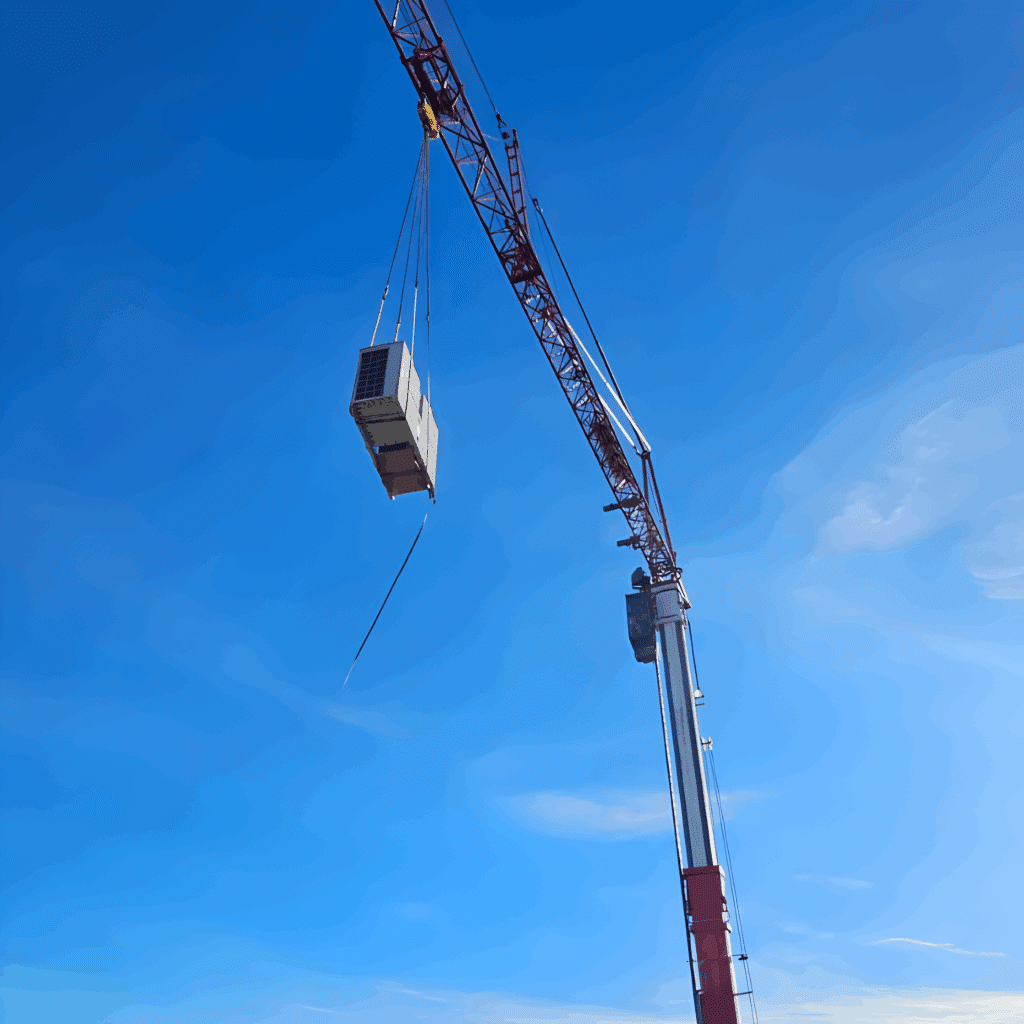
A crane’s capacity changes with its radius and how it is rigged, and LOLER allows it to be shown on a load chart for each configuration. Our guide What size crane do I need? explains why a crane’s headline tonnage is only available close in.
Always use the figures and instructions on the equipment and from its manufacturer, and have every lift planned by a competent person.
From our lifts
Before anything goes on the hook, we check that every sling and shackle carries a readable rating and identification mark, and that it matches its certificate and latest thorough examination report. A tag that doesn’t match the item means the item doesn’t get used.
The most common mix-up we see is reading the figure on the tag as what a sling will always lift. That figure is for a straight lift, or for legs within the marked angle. Choke it, or spread the legs wider, and it carries less, so we work the real figure out in the lift plan, not on the day.
Questions
Common questions
What does SWL stand for?
SWL stands for safe working load: the heaviest load a competent person judges an item of lifting equipment can take on a particular job. It is the term used in the LOLER regulations and the figure recorded on reports of thorough examination. LEEA’s code notes that some regions say specific application working load instead, keeping the same initials.
What does WLL stand for?
WLL stands for working load limit: the heaviest load the manufacturer built an item of lifting equipment to take. It is the figure usually marked on lifting accessories such as slings and shackles. It is worked out for ideal conditions of use, so a harder job can call for a lower figure.
Are SWL and WLL the same?
On an ordinary job, yes: the SWL equals the WLL. They differ when a competent person lowers the SWL because the job is harder on the equipment than the design allows, such as lifting in high winds or where shock loading is likely. The WLL stays the same, and only the SWL for that use changes.
What is the difference between WLL and SWL in the UK?
In Great Britain, the law asks for the SWL. Under regulation 7 of LOLER, lifting machinery and accessories must be marked to show their safe working loads, while manufacturers more commonly rate accessories by their WLL, the maximum SWL. Where no lower figure is needed, the WLL and SWL are the same figure. Northern Ireland has its own equivalent regulations.
Can the SWL be higher than the WLL?
No. LEEA’s code treats the WLL as the ceiling for the SWL, so a competent person can set the SWL at the WLL or below it. It cannot go above the manufacturer’s rating. If the load is heavier than the SWL allows, the answer is equipment with a higher rating.
What does SWL 1000kg mean?
SWL 1000kg means the item may lift up to 1,000 kg in the conditions it is rated for, and no more. On a multi-leg sling, the figure covers the whole sling within its stated leg angles. On a crane or hoist, the figure applies only to the configuration it is given for.
How is the working load limit worked out?
For a lifting accessory, the manufacturer divides the minimum breaking load by a ratio, called a factor of safety in LEEA’s code and a working coefficient in the Supply of Machinery (Safety) Regulations 2008, which give a general figure for each kind of accessory. The marked WLL is the result. That margin is never spare capacity for a heavier load.
Does a crane have a WLL?
A crane’s equivalent of the WLL is its rated capacity: the heaviest gross load it can take in one set-up. L113 says that in some cases, such as a mobile crane, the weight of the hook block and lifting accessories should be counted as part of the load. Check the load chart for the exact set-up.
Who sets the safe working load?
A competent person sets the SWL, such as the engineer who thoroughly examines the equipment. For new equipment in normal use, the SWL is the manufacturer’s WLL. Where a job needs a lower figure, LEEA advises telling the supplier when ordering so the right SWL is marked. Otherwise the user must have a competent person decide it, then mark it.
Get help
Get help with the rigging for your lift
Call us on 0800 008 6096 or email office@synergy-lifting.co.uk. Send us the load’s weight and lifting points, with photos of the load and where it is going, and we will advise on the lift.
Find out more about our crane hire and contract lifting service, or our lift and shift service for loads moved inside buildings.
Get a quote
Ready for a quote?
Send us the details and we will come back with a quote, usually the same day for a desktop survey.
Or call 0800 008 6096