
Contents
Overview
What the Health and Safety Executive is
The Health and Safety Executive (HSE) is Britain’s national regulator for health and safety at work. It inspects workplaces, investigates accidents, enforces the law and publishes the codes of practice and guidance that employers work to.
In short
- HSE’s remit is Great Britain. Northern Ireland has its own regulator, HSENI.
- HSE inspects building sites and factories, while local councils inspect offices, shops, warehouses and hotels.
- Inspectors can serve improvement and prohibition notices, and serious breaches can end in prosecution.
- HSE runs RIDDOR reporting and publishes L113, the code of practice for LOLER.
| Full name | Health and Safety Executive |
|---|---|
| Abbreviation | HSE |
| Type | Executive non-departmental public body, sponsored by the Department for Work and Pensions |
| Legal basis | Section 10 of the Health and Safety at Work etc. Act 1974 |
| Remit | Workplace health and safety in Great Britain, and some offshore work |
| Northern Ireland | Health and Safety Executive for Northern Ireland (HSENI) |
| Website | hse.gov.uk |
Role
What HSE is responsible for
Section 10 of the Health and Safety at Work etc. Act 1974 makes HSE a body acting for the Crown, and section 11 gives it duties that include giving information and advice and proposing new regulations to the Secretary of State. The Legislative Reform (Health and Safety Executive) Order 2008 abolished the Health and Safety Commission and the old HSE and created a single new HSE from 1 April 2008.
HSE shares enforcement with local councils. The Health and Safety (Enforcing Authority) Regulations 1998 give each workplace to one or the other by its main activity:
| HSE | Factories, building sites, farms, mines, schools, hospitals, utilities, fairgrounds, government premises and offshore installations |
|---|---|
| Local council | Offices, shops, warehousing and wholesale, hotels and catering, pubs, care homes, places of worship, and consumer and leisure services |
Building sites are always HSE’s. In premises the council inspects, construction work stays with the council unless the project is notifiable under CDM 2015, or the work is outside the building or in an area sealed off from normal activities.
Enforcement
How HSE enforces the law
Inspectors can visit a workplace at any reasonable time, or at any time if they think a situation is dangerous. When they find a breach, inspectors can give advice or take formal action:
- an improvement notice, which gives at least 21 days to put things right
- a prohibition notice, which stops an activity where there is a risk of serious personal injury
- prosecution, where the courts can fine without limit and send people to prison for up to 2 years
- where HSE is the enforcer, a fee under Fee for Intervention, charged by the hour for the inspector’s time when a breach is serious enough to be put to the business in writing
Ignoring a notice is a criminal offence. In Scotland, the procurator fiscal takes prosecution decisions and runs the case.
HSE keeps online registers of convictions and notices, and its Enforcement Policy Statement applies to council inspectors as well as HSE’s own.
Publications
What HSE publishes
Approved Codes of Practice, such as L113 for LOLER and L22 for PUWER, have a special legal status: a duty holder who did not follow one has to show they met the law another way. Ordinary guidance, for example the free INDG leaflets, is advisory.
HSE also runs the RIDDOR reporting system. Deaths and specified injuries can be phoned in on 0345 300 9923 during office hours, and every other report goes through the online forms. The line is not an emergency service.
HSE also checks that machinery and lifting equipment supplied for use at work meet product safety law, as the market surveillance authority for most products used at work.
Lifting
Why HSE matters for lifting and machine moving
HSE and the councils enforce the Lifting Operations and Lifting Equipment Regulations 1998 (LOLER), and HSE writes L113, the code of practice that explains them. HSE’s LOLER pages and its guidance on thorough examination set out what the law asks of a lift. On building sites, its construction pages deal with lifting operations, and GS6 covers working near overhead power lines.
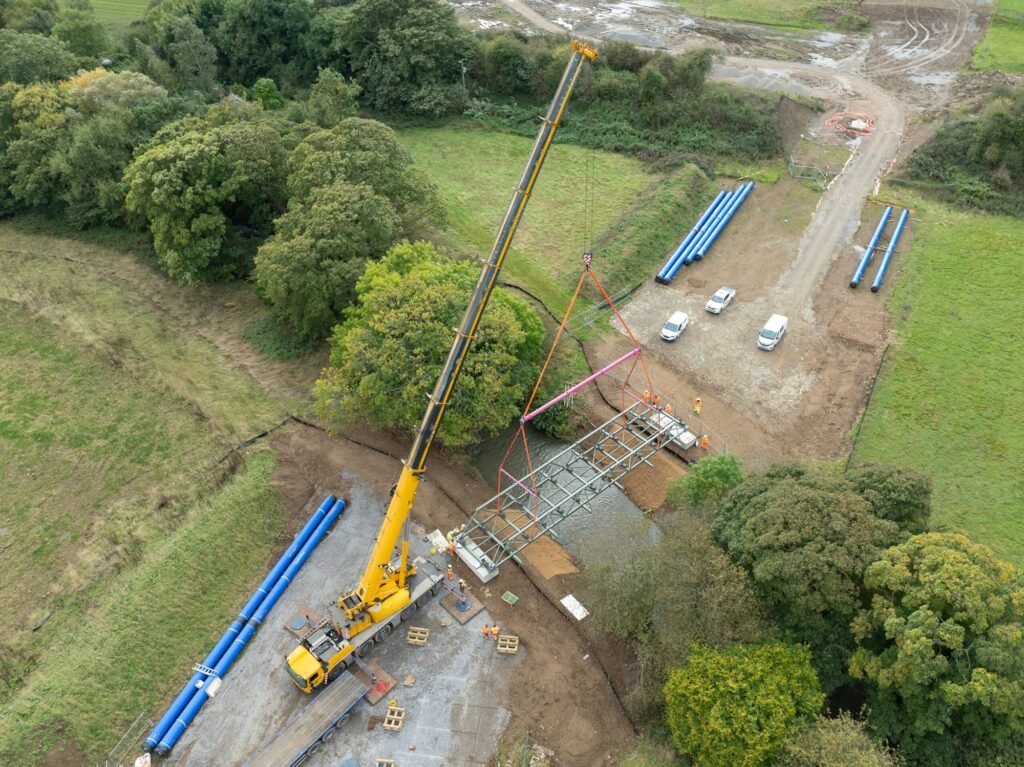
Which inspector you meet depends on where the lift happens. A crane on a building site, or a machine move in a factory, falls to HSE. A machine move inside a warehouse or a shop is normally the council’s, unless it is construction work that the rules give to HSE. A collapsed or overturned crane is a dangerous occurrence under RIDDOR, reported through HSE’s RIDDOR system whichever authority covers the site.
Northern Ireland
Northern Ireland and further reading
Northern Ireland has its own regulator, the Health and Safety Executive for Northern Ireland (HSENI), sponsored by the Department for the Economy. It shares enforcement with the 11 district councils under the Health and Safety at Work (Northern Ireland) Order 1978. HSENI has approved several HSE codes of practice for use there, including L113.
You can raise a concern about a workplace in Great Britain through HSE’s online form.
Sources and further reading
Questions
Common questions
Who enforces health and safety on a building site?
HSE, in Great Britain, for nearly all construction work. In Northern Ireland it is HSENI.
When does HSE charge a fee?
When an HSE inspector finds a material breach and writes to the business to say so. The business then pays for the inspector’s time on that breach at HSE’s published hourly rate. Council inspectors do not charge this fee.
What happens after a crane accident is reported?
The enforcing authority looks at the report and may investigate, which can lead to notices or a prosecution. If the event could have affected the crane’s safety, LOLER requires a thorough examination before it is used again.
Related
Related services and guides
For a planned lift or a machine move, see our crane hire and contract lifting and machine movement services. Call 0800 008 6096 or email office@synergy-lifting.co.uk.
Get a quote
Ready for a quote?
Send us the details and we will come back with a quote, usually the same day for a desktop survey.
Or call 0800 008 6096