
Contents
Overview
What the Work at Height Regulations 2005 cover
The Work at Height Regulations 2005 cover any place at work where a fall could injure someone. Regulation 6 sets the order: avoid work at height where the job can safely be done another way, prevent falls where it cannot, and minimise the distance and consequences of any fall that remains.
In short
- Keep people off height wherever the job can be done safely from the ground or another safe place.
- If someone has to work at height, protect the whole crew first, with guard-rails or a platform, before relying on one person’s harness.
- Work at height must be properly planned and supervised, and done by competent people or trainees under their supervision.
- A working platform on construction work must have been inspected in the 7 days before use where someone could fall 2m or more.
| Full title | Work at Height Regulations 2005 |
|---|---|
| Reference | SI 2005/735 |
| Current version | The Regulations as amended. legislation.gov.uk lists no outstanding changes to the revised text. |
| Publisher | The National Archives, on legislation.gov.uk |
| Status | In force |
| Legal status | Regulations made under the Health and Safety at Work etc. Act 1974. HSE’s guidance is the leaflet INDG401. Contravening them is a criminal offence. |
| Extent | Great Britain |
| Northern Ireland | Work at Height Regulations (Northern Ireland) 2005 |
Duty holders
Who has duties under the Regulations
Employers carry the duties for work at height by their own employees, and for work by anyone else under their control, to the extent of that control (regulation 3). Relevant self-employed people have the same duties for their own work. HSE’s work at height law page adds that the Regulations apply to anyone who controls work at height, such as a facilities manager or building owner who brings in contractors.
Anyone working under someone else’s control must report to that person any activity or defect relating to work at height that they know is likely to endanger themselves or others. Employees must also use the equipment and safety devices provided in line with their training and instructions (regulation 14).
Requirements
What the Regulations require
Planning and competence
Work at height must be properly planned, appropriately supervised and carried out as safely as reasonably practicable, and only when the weather does not put people at risk (regulation 4). Nobody may organise, plan, supervise or carry out work at height unless they are competent, or are being trained under the supervision of someone who is (regulation 5).
The order of measures
Regulation 6 sets the order, explained on HSE’s introduction to work at height:
| Avoid | Do not work at height where the job can reasonably be done safely another way. |
|---|---|
| Prevent | Otherwise, prevent falls using a place of work that is already safe or the right equipment. |
| Minimise | Where the risk remains, use equipment that cuts the distance and the consequences of a fall. |
When choosing equipment, collective protection such as guard-rails takes priority over personal protection such as a harness (regulation 7). Schedules 2 to 6 set the standards for guard-rails, working platforms, nets and airbags, personal fall protection systems and ladders.
Hazards around the work
- Fragile surfaces (regulation 9): nobody works on or near a fragile surface where that can reasonably be avoided.
- Falling objects (regulation 10): where needed to prevent injury, the employer takes suitable and sufficient steps to stop material or objects falling, and where that is not possible, to stop anyone being struck.
- Danger areas (regulation 11): where someone could fall or be hit by a falling object, the area is clearly marked and, so far as reasonably practicable, fitted with devices such as barriers that keep unauthorised people out.
- Places of work (regulation 13): the surface and every parapet, permanent rail or other fall protection are checked, so far as reasonably practicable, each time before anyone works there.
Inspection of equipment
Equipment whose safety depends on how it is put up is inspected after it is installed or assembled in each position, and any equipment is inspected after exceptional circumstances that could affect its safety (regulation 12). A working platform on construction work with a possible fall of 2m or more must have been inspected within the previous 7 days before use, where it stands or, for a mobile platform, on the site, and the inspector writes a report. When inspected equipment goes to another firm, or comes in from one, it must carry physical evidence of its last inspection; lifting equipment such as a MEWP follows LOLER’s rules on evidence of thorough examination instead. Where lifting equipment has had a thorough examination under regulation 9 of LOLER, that examination counts as its inspection under regulation 12 and the examiner’s report serves as the inspection record. This does not extend to the construction platform report and site copy in regulation 12(7) and (8).
Lifting
How the Regulations apply to lifting and machine moving
A lift often needs work at height at one or both ends, for rigging and slinging at the pick-up or for landing and unhooking at the set-down. The regulation 6 order applies to that work. A machine taken in through a raised loading door or an opening in an upper floor puts the crew at an open edge in the same way.
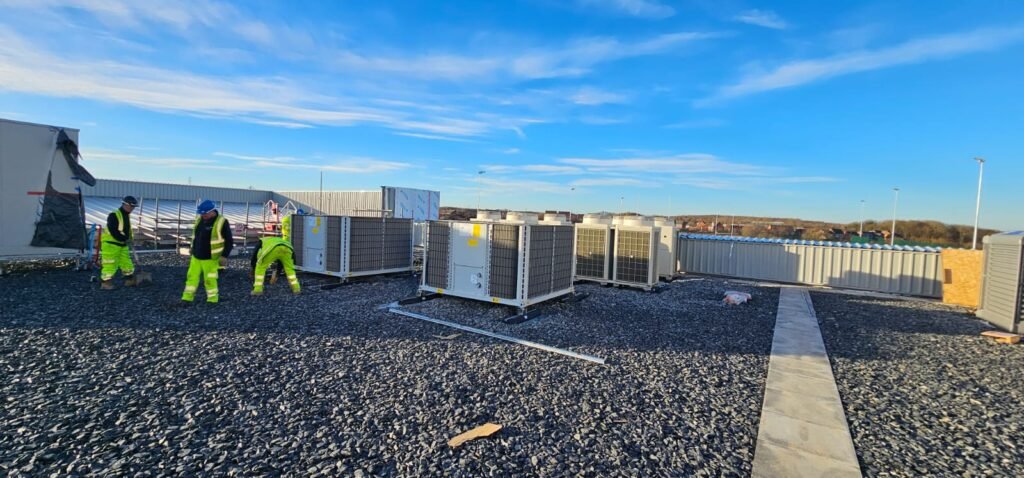
- Where rooftop plant is landed by crane, the lift plan needs to cover edge protection and how the crew reach the roof, as well as the lift itself.
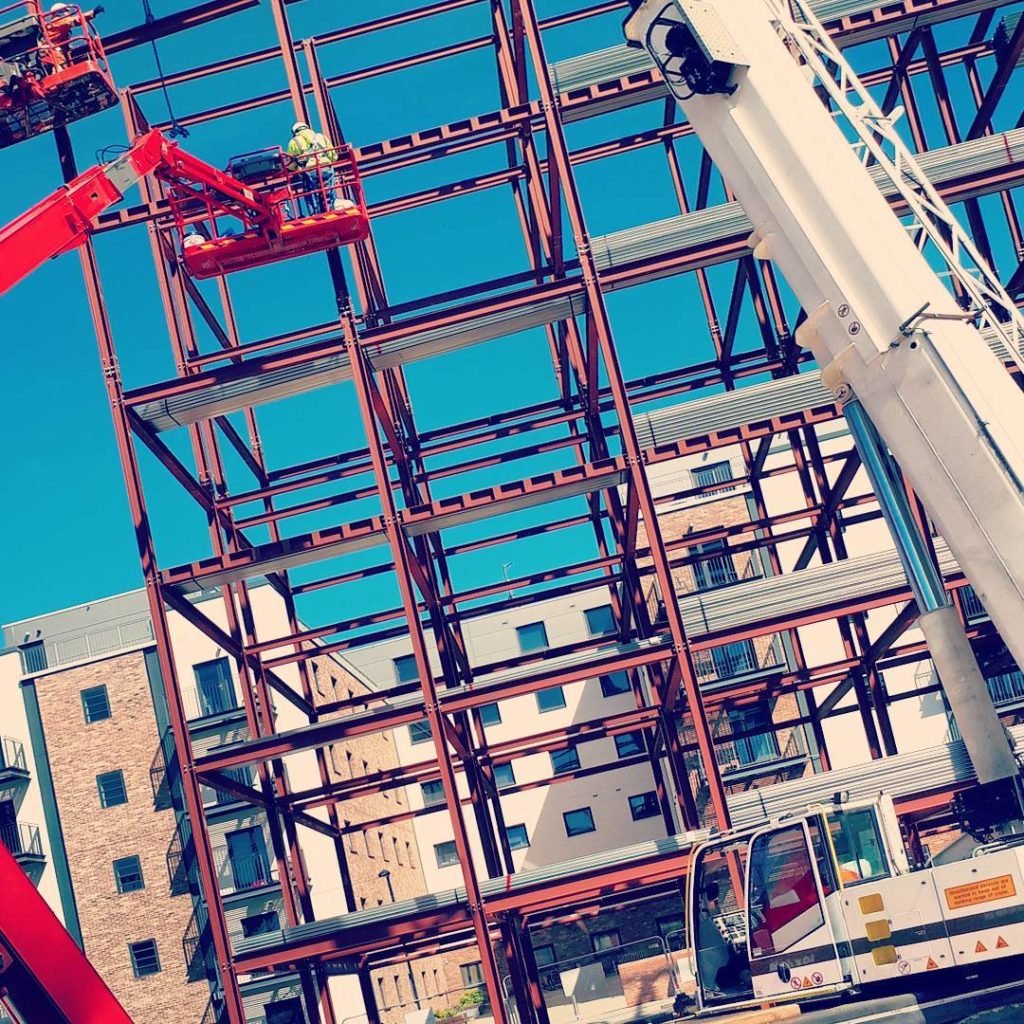
- Where rigging is done from a mobile elevating work platform (MEWP) and a risk of falling from the platform remains, HSE’s construction guidance on MEWPs says a harness with a short work restraint lanyard must be clipped to the manufacturer’s anchorage point, and calls for a practised rescue plan.
- HSE says lifting equipment not designed for lifting people should be used to lift them only in exceptional circumstances, such as a rescue (lifting people). The Lifting Operations and Lifting Equipment Regulations 1998 (LOLER) set extra requirements whenever people are lifted.
- Keep people clear of suspended loads. HSE’s lift planning guidance says loads should not be suspended over occupied areas where that can be avoided. The area below a load suspended for significant periods is a danger zone with restricted access.
Definitions
Key definitions
- Work at height: work in any place, including at or below ground level, where a person could fall a distance liable to cause personal injury if the measures in the Regulations were not taken. Getting to and from that place counts too, except by a staircase in a permanent workplace (regulation 2).
- Working platform: any platform used as a place of work or as a way in or out, including scaffolds, mobile platforms, trestles and gantries.
- Personal fall protection system: a fall prevention, restraint, work positioning, fall arrest or rescue system, other than one whose only safeguards are collective ones, or rope access and positioning techniques.
- Suitable: fit for the job in every way that could foreseeably affect someone’s safety.
Enforcement
Enforcement and penalties
HSE or the local authority enforces the Regulations, depending on the type of workplace, and prosecutions are brought under section 33 of the Health and Safety at Work etc. Act 1974. Our guide to that Act covers notices and penalties. In Scotland, the Crown Office and Procurator Fiscal Service decides whether to prosecute.
In Northern Ireland, HSENI and the district councils enforce the Northern Ireland version, SR 2005/279.
Guidance
Guidance and sources
There is no Approved Code of Practice. HSE backs its free leaflet Working at height: a brief guide (INDG401) with work at height pages, including FAQs on ladders and other equipment.
Sources and further reading
Questions
Common questions
What counts as work at height?
Any job where a fall could cause injury, including into a pit or opening at ground level. The definition sets no minimum height.
When must a scaffold be inspected?
After it is put up in each position, after anything that could affect its safety, such as high winds or alterations, and, on construction work with a possible fall of 2m or more, within the 7 days before each use.
Who can plan work at height?
A competent person, or a trainee working under one.
Related
Related services and guides
For lifts onto roofs and into plantrooms, see our crane hire and contract lifting service. Call 0800 008 6096 or email office@synergy-lifting.co.uk.
Get a quote
Ready for a quote?
Send us the details and we will come back with a quote, usually the same day for a desktop survey.
Or call 0800 008 6096