
Contents
Overview
What CDM 2015 covers
On a construction project, the Construction (Design and Management) Regulations 2015 set out who plans the work and who runs the site. A crane on a building site, or a machine being installed as fixed plant, can bring a lifting job inside CDM.
In short
- Every project has a client, and every firm doing or managing construction work on it is a contractor with duties of its own.
- On a project with several contractors, the client appoints a principal designer and a principal contractor.
- Projects above HSE’s size thresholds must be notified before the construction phase starts.
- A lifting firm that designs temporary works for a lift can also be a designer under CDM.
| Full title | Construction (Design and Management) Regulations 2015 |
|---|---|
| Reference | SI 2015/51 |
| Current version | The Regulations as amended. legislation.gov.uk lists no outstanding changes to the revised text. |
| Publisher | The National Archives, on legislation.gov.uk |
| Status | In force |
| Legal status | Regulations made under the Health and Safety at Work etc. Act 1974. HSE’s guidance is L153; there is no Approved Code of Practice. Contravening them is a criminal offence. |
| Extent | Great Britain |
| Northern Ireland | Construction (Design and Management) Regulations (Northern Ireland) 2016 |
Duty holders
Duty holders in lifting work
CDM names its duty holders by role. A lifting firm can hold more than one of these roles on the same job.
- Client: the person or business a project is carried out for. A business client must make suitable arrangements for managing the project, including enough time and resources (regulation 4).
- Principal designer: a designer appointed by the client to control the pre-construction phase, the planning and design stage before work on site starts (regulation 5).
- Principal contractor: the contractor the client appoints in writing to plan, manage and monitor the construction phase, including a suitable site induction (regulation 13). Both appointments must be made before the construction phase begins.
- Designers: anyone whose business involves preparing or modifying designs. HSE’s guidance in L153 includes temporary works engineers among them.
- Contractors: any business carrying out, managing or controlling construction work. A lifting firm that carries out, manages or controls lifts as part of the construction work is a contractor.
- Workers: people working for or under the control of a contractor, who must co-operate with others and report anything likely to endanger health or safety (regulation 8).
Requirements
What the Regulations require
Notification
If the construction work is scheduled to last more than 30 working days with more than 20 workers working at the same time at any point, or to exceed 500 person days, the client must notify HSE in writing as soon as practicable before the construction phase begins (regulation 6). On a domestic project, the contractor or principal contractor does this. HSE takes notifications on its F10 form.
Competence and planning
Designers and contractors must have the skills, knowledge and experience, and for an organisation the organisational capability, to fulfil their role (regulation 8). A contractor must not start work until it is satisfied the client knows its duties, and must plan, manage and monitor its work so that, so far as is reasonably practicable, it is carried out without risks to health and safety (regulation 15). The construction phase plan is drawn up by the principal contractor, or by the contractor where there is only one.
Safety standards on site (Part 4)
Part 4 sets the physical standards every contractor works to on site. The ones that matter on a lift are keeping new or existing structures stable while work goes on (regulation 19), recording in writing how demolition or dismantling will be done before it starts (regulation 20), stopping excavations collapsing (regulation 22), and keeping traffic routes and vehicle movements safe (regulation 27 and regulation 28).
Lifting
How the Regulations apply to lifting and machine moving
L153 notes that other health and safety regulations still apply to construction. For a lift, these include the Lifting Operations and Lifting Equipment Regulations 1998 (LOLER), which requires every lift to be properly planned by a competent person, and the Provision and Use of Work Equipment Regulations 1998 (PUWER). LOLER covers the crane and the lift plan; the principal contractor co-ordinates when and where the lift happens.
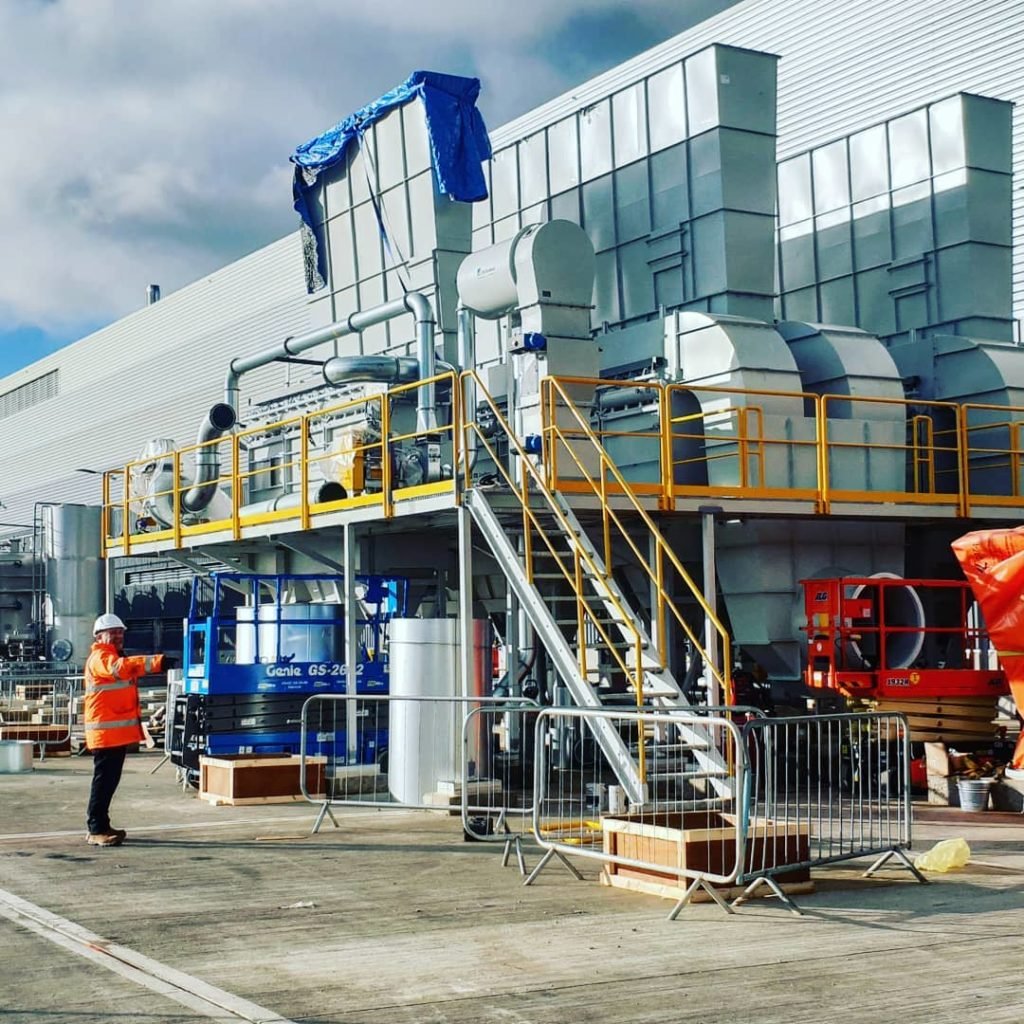
- Under regulation 2, a “structure” includes fixed plant, so installing or dismantling fixed plant inside a building can be construction work. So can installing or removing mechanical and electrical services normally fixed within or to a structure. Moving a machine that is not fixed plant is not listed as construction work in regulation 2, though it can form part of a construction project.
- Where the lift is part of a project with a principal contractor, the lifting contractor follows the parts of the construction phase plan that cover its work and any directions from the principal designer or principal contractor. Its crew go through the site induction (regulation 15).
Definitions
Key definitions
- Construction work: building, civil engineering or engineering construction work, including construction, alteration, maintenance, dismantling and demolition of a structure, site preparation, and the assembly on site of prefabricated elements (regulation 2).
- Structure: a building or other works, including any formwork, falsework or scaffold used during construction work.
- Construction site: any place where construction work is being carried out, or that the workers have access to, but not any part set aside for other work.
- Construction phase plan: the plan for managing health and safety while work on site is under way, drawn up under regulation 12 or 15.
Enforcement
Enforcement and penalties
HSE enforces CDM on most construction work, and local authorities cover some smaller jobs on premises they already regulate. Other regulators cover some sectors, such as the railways. Under the Health and Safety (Enforcing Authority) Regulations 1998, HSE also enforces work by outside contractors on premises a council would otherwise cover, where the project is notifiable or the work is to the outside of the building, among other cases.
Breaking the Regulations is an offence under section 33 of the Health and Safety at Work etc. Act 1974; our guide to that Act covers notices and penalties. In Scotland, the Crown Office and Procurator Fiscal Service decides whether to prosecute.
In Northern Ireland, the Construction (Design and Management) Regulations (Northern Ireland) 2016 apply with the same notification thresholds, and projects are notified to HSENI on its NI10 form. HSENI enforces health and safety on building sites.
Guidance
Guidance and sources
Following L153, Managing health and safety in construction, is not compulsory unless it says so, but if you do follow it you will normally be doing enough to comply. HSE’s CDM pages set out each duty holder’s role, including a page for contractors.
Sources and further reading
- Construction (Design and Management) Regulations 2015 on legislation.gov.uk
- L153, Managing health and safety in construction (PDF)
- HSE: CDM duties for contractors
- Construction (Design and Management) Regulations (Northern Ireland) 2016 on legislation.gov.uk
Questions
Common questions
When does a construction project have to be notified to HSE?
Once it passes either threshold: more than 30 working days with over 20 people working at once, or more than 500 person days. The client sends HSE an F10 before work on site starts.
Who counts as a contractor under CDM?
Any person who, in the course of business, carries out, manages or controls construction work, including a business client that does so. HSE puts it as anyone who directly employs or engages construction workers or manages construction work.
Who appoints the principal contractor?
The client, in writing, wherever more than one contractor is working on the project or is likely to be.
Related
Related services and guides
For lifts on construction projects, see our crane hire and contract lifting service, and for plant going into or out of a building, machine movement. Call 0800 008 6096 or email office@synergy-lifting.co.uk.
Get a quote
Ready for a quote?
Send us the details and we will come back with a quote, usually the same day for a desktop survey.
Or call 0800 008 6096