
Contents
Overview
What LOLER, the Lifting Operations and Lifting Equipment Regulations 1998, covers
The Lifting Operations and Lifting Equipment Regulations 1998 cover lifting equipment at work and the lifts made with it, from cranes and hoists to slings and shackles.
In short
- A competent person must plan every lift, and the lift must be supervised.
- Lifting accessories and equipment for lifting people need a thorough examination at least every 6 months, and other lifting equipment at least every 12 months, unless an examination scheme sets the intervals.
- A defect found at examination must be reported to the employer straight away.
- Employers have duties, and so does anyone who controls lifting equipment or how it is used.
| Full title | Lifting Operations and Lifting Equipment Regulations 1998 |
|---|---|
| Reference | SI 1998/2307 |
| Current version | The Regulations as amended. legislation.gov.uk lists no outstanding changes to the revised text. |
| Publisher | The National Archives, on legislation.gov.uk |
| Status | In force |
| Legal status | Regulations made under the Health and Safety at Work etc. Act 1974, with an Approved Code of Practice (L113). Contravening them is a criminal offence. |
| Extent | Great Britain |
| Northern Ireland | Lifting Operations and Lifting Equipment Regulations (Northern Ireland) 1999 |
Duty holders
Who has duties under the Regulations
Under regulation 3, the duties sit with whoever provides or controls the lifting equipment and the lift:
- Employers, for lifting equipment provided for or used by their employees at work.
- Self-employed people covered by the Regulations, for lifting equipment they use at work.
- Anyone who controls lifting equipment or the way it is used, for the part they control.
- Any employer sending equipment out, a hire company included, must not let lifting equipment leave its business, or use equipment that has come from another business, unless physical evidence of its last thorough examination goes with it (regulation 9).
Duties
What the Regulations require
- Strength and stability (regulation 4): equipment must be strong and stable enough for each load, with particular attention to the stress at its mounting or fixing point.
- Lifting people (regulation 5): a carrier must stop anyone in it being crushed, trapped, struck or falling out, and have suitable devices to stop it falling. Anyone trapped in it must not be put in danger and must be able to be freed.
- Positioning and installation (regulation 6): equipment is positioned so the risk of it or its load hitting someone, or of the load drifting or falling unintentionally, is as low as reasonably practicable.
- Marking (regulation 7): machinery and accessories show their safe working load. Where a machine’s safe working load changes with its configuration, that information is marked or kept with it. Equipment for lifting people is marked as such, and equipment that could be used for people by mistake is marked as not for lifting people.
- Organising lifts (regulation 8): every lifting operation must be properly planned by a competent person. It must also be appropriately supervised and carried out in a safe manner.
LOLER has no risk assessment regulation of its own. The risks of a lift are assessed under the Management of Health and Safety at Work Regulations 1999, as HSE’s L113 explains.
Examination
Thorough examination intervals and reports
Lifting equipment is thoroughly examined before it is first put into service (regulation 9). The exception is equipment that has not been used before and either has a declaration of conformity made no more than 12 months before it goes into service, or comes from another business with evidence of its last examination. Where its safety depends on how it is installed, it is also examined after installation and after each assembly at a new site or location. After that, equipment exposed to conditions that cause deterioration and could lead to danger is examined at these intervals:
| Equipment for lifting people | At least every 6 months |
|---|---|
| Lifting accessories | At least every 6 months |
| Other lifting equipment | At least every 12 months |
| Any lifting equipment | Or at the intervals in an examination scheme drawn up by a competent person |
| After exceptional circumstances | Each time something happens that could affect its safety |
Where it is appropriate, a competent person also inspects the equipment between examinations.
Reports and defects
The examiner must tell the employer straight away about any defect that is or could become a danger, then send a written report to the employer and to anyone the equipment is hired or leased from (regulation 10). Schedule 1 lists what the report contains, including whether the equipment is safe to operate and the latest date for the next examination. If a defect involves an existing or imminent risk of serious personal injury, a copy goes to the enforcing authority, which is HSE for hired or leased equipment. The employer must not use the equipment until the defect is put right, and where the report gives a time limit for a defect that is not yet dangerous, must not use it after that time unless the defect is fixed.
Keeping records
Under regulation 11, a periodic examination report is kept until the next one is made or for 2 years, whichever is later. A first examination report is kept for 2 years for an accessory, and until you stop using the equipment for anything else. An installation report is kept until the equipment stops being used at that place, and a declaration of conformity for as long as you use the equipment.
Lifting
How the Regulations apply to lifting and machine moving
Who carries which duty depends on how the crane is provided (HSE’s L113):
- Crane hire: the hire company sends evidence of the crane’s last thorough examination. You then manage the lifts and keep the examinations up to date.
- Contract lift: where the contractor plans the lift and supplies the crane with a full lifting team, it is responsible for keeping the crane maintained and thoroughly examined, and for carrying out the lift safely.
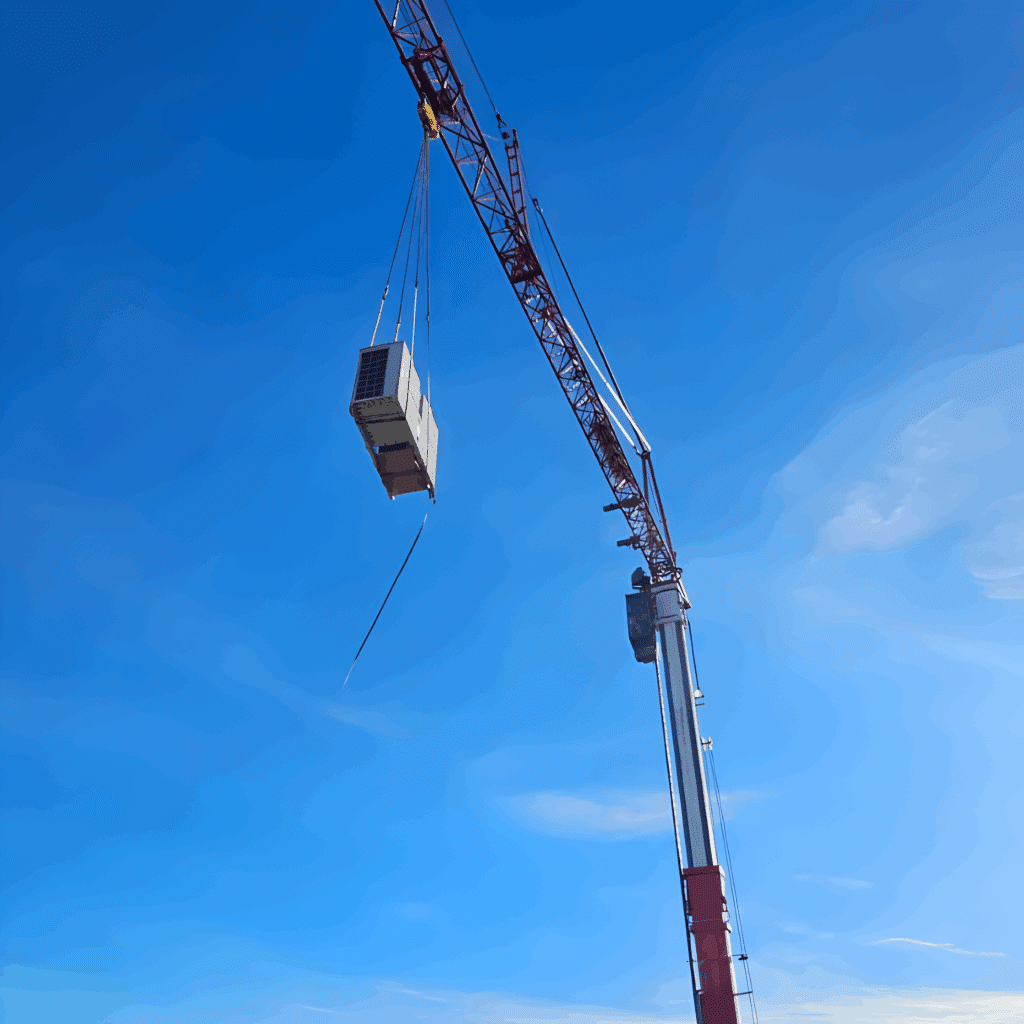
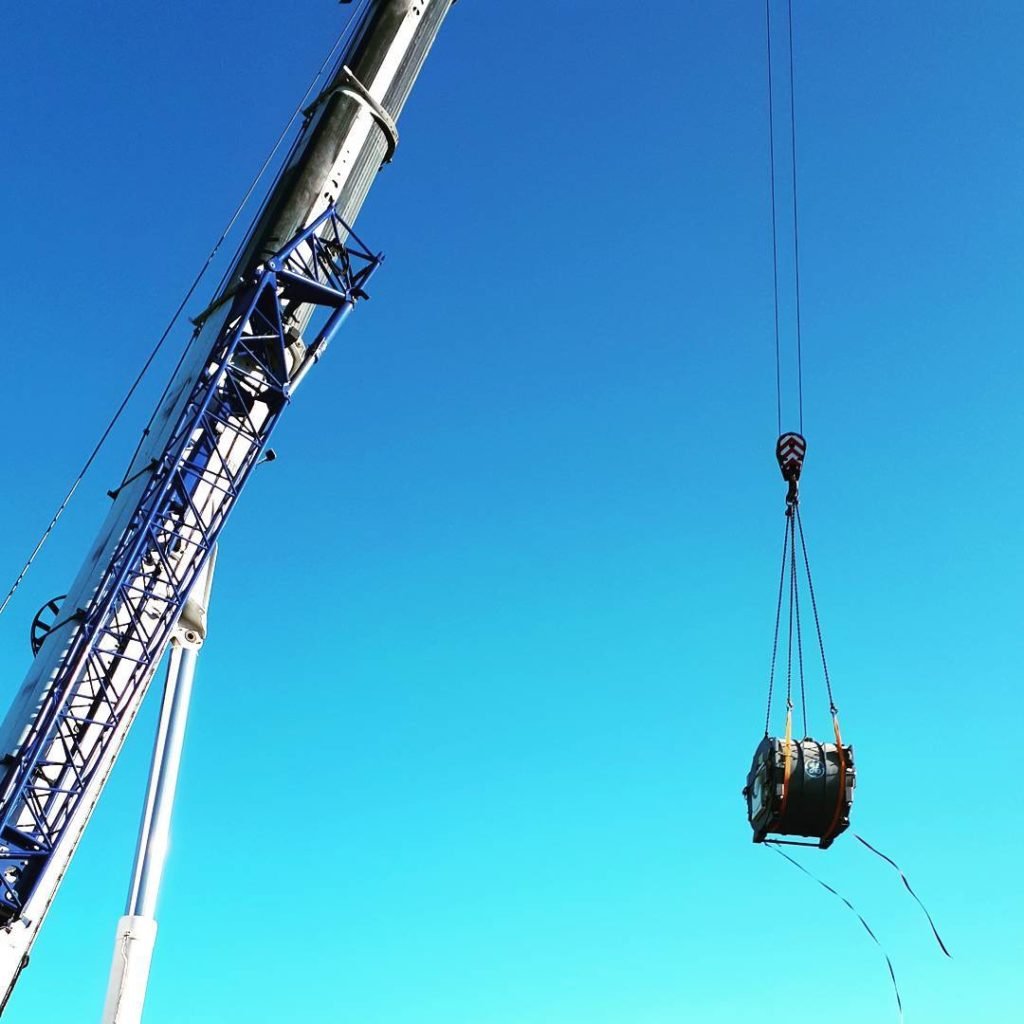
On a machine move, a crane used to raise the machine is lifting equipment, and the lift is a lifting operation under LOLER. Jacks and gantries that raise it are lifting equipment too. Skates that only roll a machine along the floor do not lift or lower it, so they are not lifting equipment. L113 treats winching a load along the ground the same way. Skates come under the Provision and Use of Work Equipment Regulations 1998 (PUWER).
Definitions
Key definitions
- Lifting equipment: work equipment for lifting or lowering loads, including its attachments for anchoring, fixing or supporting it (regulation 2).
- Accessory for lifting: work equipment for attaching loads to machinery for lifting, such as slings and shackles.
- Lifting operation: an operation concerned with the lifting or lowering of a load.
- Thorough examination: an examination by a competent person, including any testing that person decides is appropriate.
Enforcement
Enforcement and guidance
HSE and local authorities enforce LOLER, depending on the type of workplace, and breaking it is an offence under section 33 of the 1974 Act. In Scotland the Crown Office and Procurator Fiscal Service decides whether to prosecute. In Northern Ireland, HSENI and the district councils enforce the 1999 Regulations, and HSENI has approved L113 for use there.
The Approved Code of Practice is L113, Safe use of lifting equipment, second edition, amended in 2018. If you are prosecuted and did not follow the relevant part of it, you have to show you met the law in some other way. HSE also publishes two free leaflets: Lifting equipment at work (INDG290) and Thorough examination of lifting equipment (INDG422).
Sources and further reading
Questions
Common questions
Who can carry out a thorough examination?
A competent person with the knowledge and experience of the equipment to find defects. HSE’s page on thorough examinations of lifting equipment says they should not be the person who carries out its routine maintenance, and its leaflet INDG422 says they should be independent and impartial enough to make objective decisions.
Who arranges the thorough examination of a hired crane?
The hire company sends evidence of the last examination with the crane. The user is responsible for making sure periodic examinations are carried out on time while it has the crane.
When must lifting equipment be thoroughly examined?
Where conditions cause deterioration that could lead to danger: at least every 6 months for accessories and equipment that lifts people, every 12 months for other equipment, or as an examination scheme sets (regulation 9(3)).
Related
Related services and guides
For a crane on hire or a managed lift, see our crane hire and contract lifting service. For machines going into buildings, see machine movement. Call 0800 008 6096 or email office@synergy-lifting.co.uk.
Get a quote
Ready for a quote?
Send us the details and we will come back with a quote, usually the same day for a desktop survey.
Or call 0800 008 6096