

Contents
Overview
What BS 7121-7 is
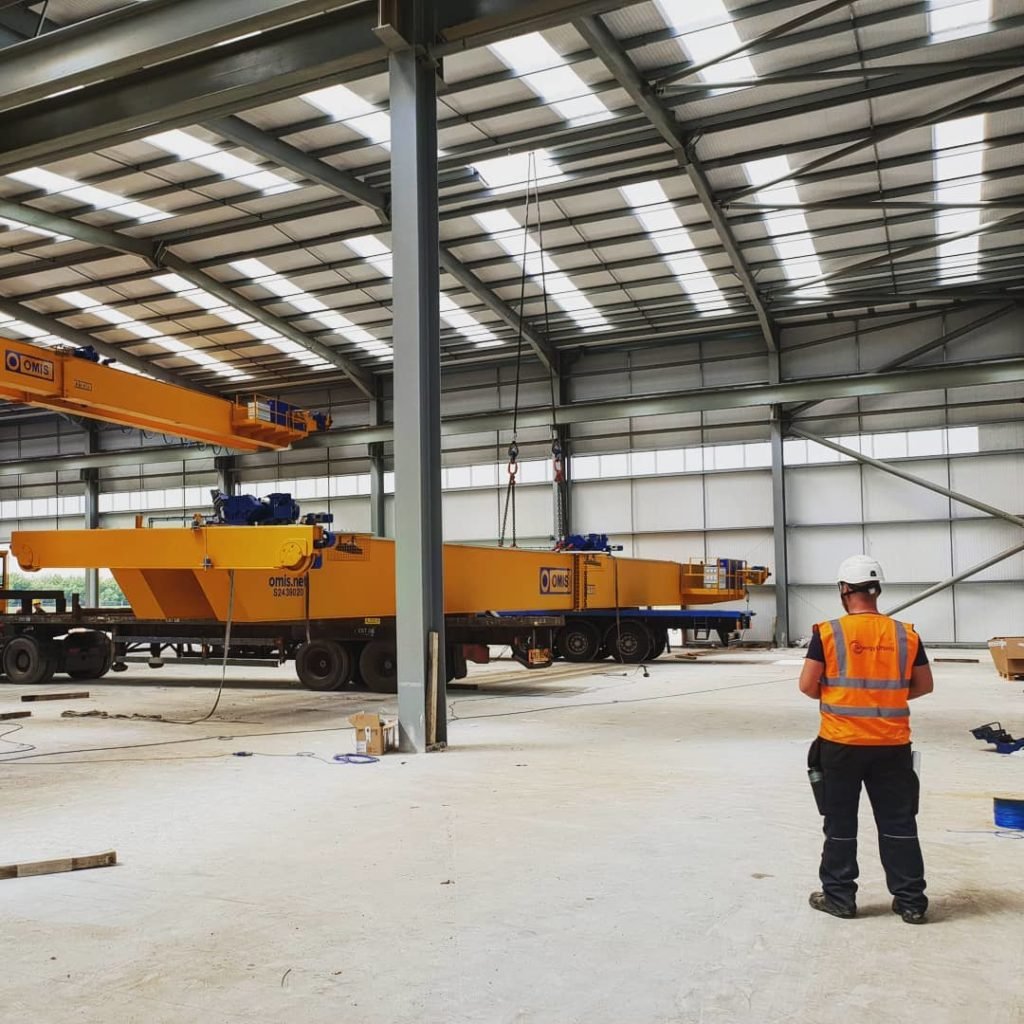
BS 7121-7 is the British Standard code of practice for using bridge and gantry cranes safely, indoors or out, along with light crane systems. It was published in 2019 as a new part of the series.
In short
- It is a code of practice, not law, and is read together with BS 7121-1 and the whole of BS 7121-2.
- Lifts with an overhead crane are planned and categorised in the same way as any other crane lift.
- Powered cranes made before 1995 without overload protection should be upgraded.
- A crane that has stood unused for more than 12 months should be thoroughly examined before it goes back into service.
| Full title | Code of practice for safe use of cranes — Part 7: Bridge and gantry cranes, including light crane systems |
|---|---|
| Reference | BS 7121-7:2019 |
| Current edition | First edition, published 30 September 2019 |
| Publisher | BSI (BSI Standards Limited) |
| Status | Current |
| Legal status | British Standard code of practice. Its recommendations have no legal force of their own. |
| Intended for | Lifting operations with bridge and gantry cranes anywhere in the UK |
Scope
What BS 7121-7 applies to
The standard covers general-purpose cranes of four kinds: top-running bridge cranes, under-slung bridge cranes, portal and semi-portal gantry cranes, and light crane systems.
It leaves out cranes permanently fitted with special attachments, such as magnet or ladle cranes, and cranes designed for hazardous settings such as explosive atmospheres. Cranes on vessels and equipment that only winches or hauls loads along are also outside it, and rubber-tyred gantry cranes come under BS 7121-2-9.
Planning
Planning lifts with an overhead crane
Planning follows BS 7121-1. Every installation and lifting operation has a safe system of work, communicated before work starts. An appointed person, named in writing and trained to the syllabus in BS 7121-1 Annex A, grades each lift from basic to complex and signs the written lift plan. A generic plan often suits basic lifts if no extra hazards are found on site. A lift using two or more separately controlled cranes is treated as complex.
Part 7 also asks for repeated loads to be kept to 70% to 80% of rated capacity, unless the crane’s duty classification allows repeated full-load lifts. Lifting accessories should have had a thorough examination within the last six months, or under a scheme.
Controls
Controls and safety devices
| Pendant travel speed | No more than 1.0 m/s for a single-speed crane on a clear walkway. Cranes with two or more speeds, or on an obstructed walkway, should offer 0.75 m/s or less. |
|---|---|
| Emergency stop | Red on a yellow background on the crane’s controls, needing a manual reset. Some remote stations may omit it. |
| Isolators | A lockable, labelled isolator for the power supply to the runway, and a second lockable isolator on the crane. |
| Limits | The upper hoist limit is a safety device and should not be used as a routine stop. Cranes sharing a track should have anti-collision control unless the risk is controlled another way. |
| Overload protection | Powered cranes made before 1995 without it should be upgraded. |
| Radio control | Secure, crane-specific frequencies and clear crane identification. Where needed, remote stations have a strap and a key lock against unauthorised use. |
| Control type | A cab suits long travel and a radio control gives a wider view; a pendant suits an operator who also slings the load. |
Safe use
Runways and daily use
Existing runways should be surveyed for wear and damage such as cracked welds before a crane is bought for them, and tracks aligned within tolerance. Any assessment of an existing supporting structure is recorded. A modified crane with more span or capacity, or a changed hoist drive, is treated as a new crane, and a new installation is proved with tests before use.
In use, the line of pull is vertical, with no side lifting or dragging. The load is raised just clear and checked before it goes further, and nobody stands under or rides on it. At the end of the job the crane is parked with the hook raised and the power isolated. Operators are trained on the specific crane, including its emergency stop and out-of-service mode, and assessed in practice. A crane out of use for more than 12 months should be thoroughly examined before it works again.
The law
How BS 7121-7 relates to LOLER and PUWER
The foreword draws attention to LOLER and PUWER, among other laws, including the Supply of Machinery (Safety) Regulations 2008. For inspection and thorough examination it points to BS 7121-2-1 and BS 7121-2-7, and regulation 9 of LOLER requires a crane to be examined after installation, then at least every 12 months or under an examination scheme, and after exceptional circumstances.
LOLER and PUWER apply in Great Britain. Northern Ireland has its own 1999 versions, such as the Lifting Operations and Lifting Equipment Regulations (Northern Ireland) 1999.
Editions
Editions and related parts
The 2019 edition is the first. Its inspection companion has been amended since, and Part 7 points to the latest edition, now BS 7121-2-7:2012+A2:2022.
Sources and further reading
Questions
Common questions
Who plans a lift with an overhead crane?
An appointed person, formally appointed and trained to BS 7121-1, who signs the written lift plan.
What travel speed suits a pendant-controlled crane?
On a single-speed crane, no more than 1.0 m/s on a clear walkway. Faster cranes need a speed of 0.75 m/s or less to choose from, and so do obstructed walkways.
When does an overhead crane that has stood unused need examining?
After more than 12 months out of use, a competent person should examine it thoroughly first. After a shorter lay-up, it needs a current report of thorough examination and an inspection before use.
Related
Related services and guides
For installing or moving cranes and machinery inside buildings, see our machine movement and crane hire and contract lifting services. Call 0800 008 6096 or email office@synergy-lifting.co.uk.
Get a quote
Ready for a quote?
Send us the details and we will come back with a quote, usually the same day for a desktop survey.
Or call 0800 008 6096