

Contents
Overview
What BS 7121-3 is
BS 7121-3 is the British Standard code of practice for using mobile cranes safely. It takes the general recommendations of BS 7121-1 and applies them to cranes that set up on outriggers or travel with their load.
In short
- It is a code of practice, not law, and is read together with BS 7121-1 and the inspection parts of BS 7121-2.
- An appointed person plans every lift, and the lift plan covers the ground under the crane as well as the lift itself.
- A customer without lifting know-how is steered towards a contract lift, where the contractor plans the work.
- Amendment 1 in 2019 revised the guidance on fly jibs and road-rail cranes.
| Full title | Code of practice for safe use of cranes — Part 3: Mobile cranes |
|---|---|
| Reference | BS 7121-3:2017+A1:2019 |
| Current edition | The 2017 edition with Amendment 1, issued 31 July 2019. The 2017 edition replaced BS 7121-3:2000. |
| Publisher | BSI (BSI Standards Limited) |
| Status | Current |
| Legal status | British Standard code of practice. Its recommendations have no legal force of their own. |
| Intended for | Lifting operations with mobile cranes anywhere in the UK |
Scope
What BS 7121-3 applies to
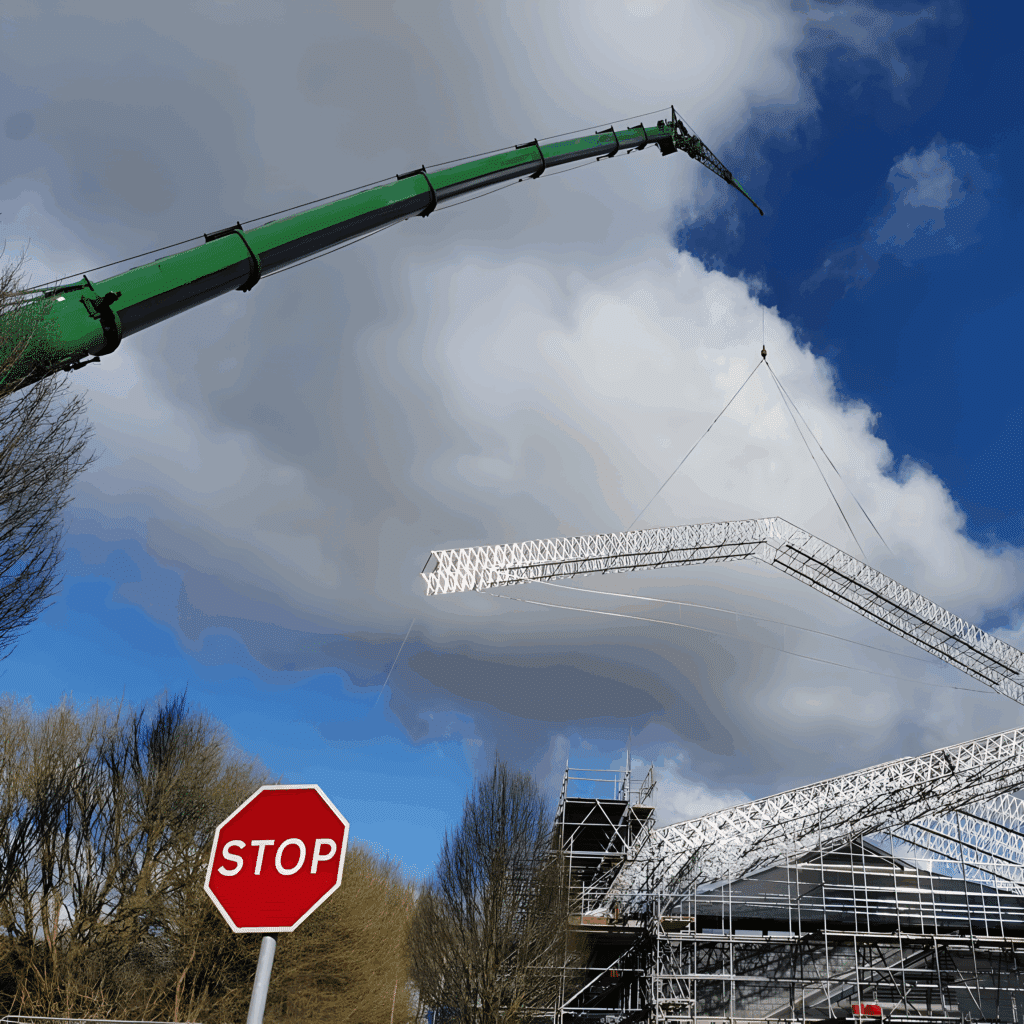
The standard covers mobile cranes that pick and carry or work on outriggers or stabilisers, including those assembled on site to work from a fixed base. It describes all-terrain, crawler, truck-mounted, rough-terrain, yard, spider, low-headroom and road-rail cranes, and mobile self-erecting tower cranes.
It does not cover rail-mounted cranes or cranes designed specifically for railway work. Self-erecting tower cranes on a cruciform base belong to BS 7121-5. Bungee jumping and cranes inside fully automated systems are excluded, as in the general part.
Planning
Planning a mobile crane lift
The structure comes from BS 7121-1: an appointed person, named in writing and trained to the syllabus in its Annex A, plans the lift and places it in a category from basic to complex. The outcome goes into a written lift plan. The method statement covers the crane configuration, the outrigger support and ground assessment, overhead and underground hazards and the wind limit for the lift, and the team signs to confirm the briefing. For repetitive work, the crane is chosen so that each load stays within 70% to 80% of its rated capacity, unless its duty classification allows repeated lifting at full load.
Who plans the lift under crane hire
Under crane hire with an operator, the owner provides a competent operator and a maintained crane with a current report of thorough examination, but planning the lift and choosing a suitable crane stay with the hirer. If the hirer has no lifting expertise of its own, the standard points to a contract lift instead. It advises against offering crane hire to householders, and against hybrid lifts, where a hired crane’s owner helps plan the lift and responsibility blurs.
Setting up
Ground, outriggers and clearances
- Ground: the appointed person gets a competent person’s assessment that the ground can carry the crane, using ground loadings from the manufacturer for rigging and de-rigging, the planned lifts, the crane with no hook load and any movement while rigged. Packing under outriggers should be designed for the job, with no gaps in a layer. Load is taken to spread at 45°, so a mat should sit further from an unsupported excavation than the excavation is deep. On a suspended slab, an engineer assesses the structure, and designed back-propping is used unless the engineer advises otherwise in writing.
- Outriggers: set as the manufacturer and the duty chart say. Partial extension is planned by the appointed person, and partial and full extension are not mixed. Cranes that set each outrigger independently, with the rated capacity indicator working out the duty, are the exception and need extra care to the manufacturer’s instructions.
- Travelling: lifting “free on wheels” and pick and carry only where the manufacturer allows it, within the chart. Moving a fully rigged crane around site is a last resort, planned like a lift, with the route walked first.
- Clearances: at least 600 mm between moving parts of the crane and any obstacle. Where the crane or load could come within 10 m of an overhead line, the power is switched off where reasonably practicable; otherwise HSE’s guidance on overhead power lines, GS6, and L113 apply.
Operations
Wind, multiple cranes and lifting people
The manufacturer’s wind limit should never be exceeded, and limits for rigging and de-rigging can be lower than for lifting. Work should stop if a thunderstorm approaches, and a crane struck by lightning needs a thorough examination before further use.
Two or more cranes should share a load only when one crane cannot do the job. They should be of equal capacity and similar make and configuration, with one person in overall control. Unless every factor is known accurately and monitored by instruments, the cranes should be down-rated, possibly by 30% or more. The standard also says mobile cranes should not share a lift with tower cranes or other lifting equipment. That is a recommendation in a code of practice, so a job that needs one, such as a tandem lift with an overhead crane, has to be justified and planned with particular care.
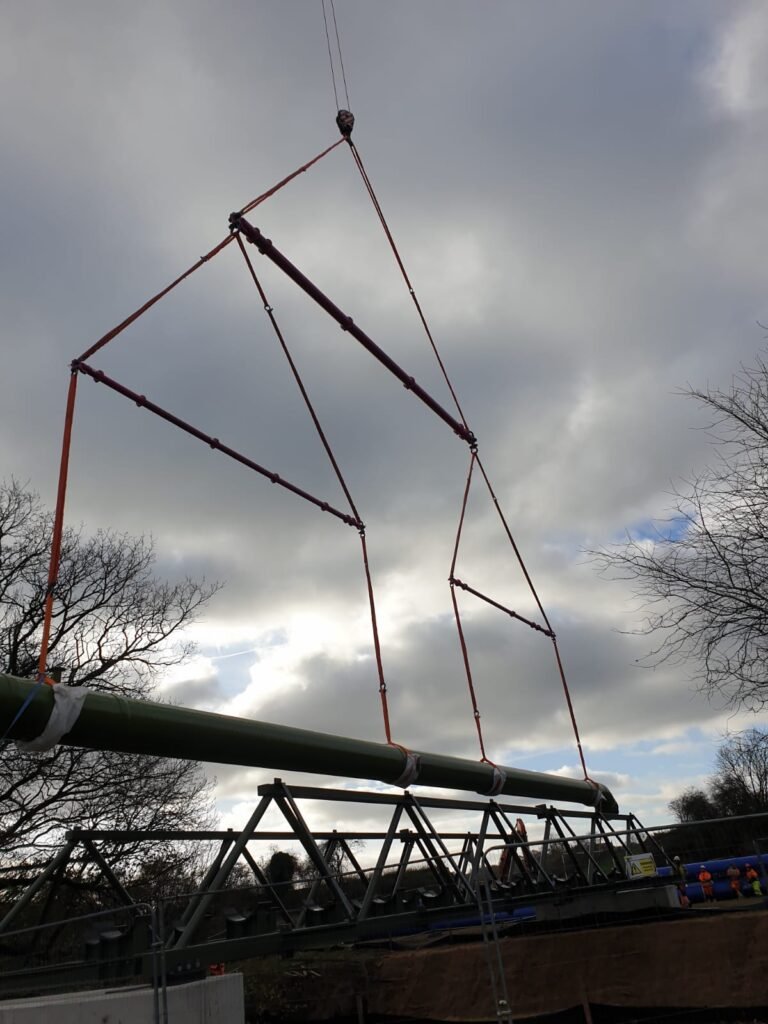
People should be lifted by crane only in exceptional cases. They ride in a purpose-made carrier on a crane rated for at least twice the weight of the loaded carrier and its lifting accessories. The carrier moves at no more than 0.5 m/s and is not used in wind above 7 m/s.
The law
How BS 7121-3 relates to LOLER and PUWER
The foreword names LOLER and PUWER among the legislation that applies, along with road traffic law for cranes driven on public roads. Regulation 8 of LOLER requires employers to make sure every lifting operation is properly planned by a competent person and appropriately supervised. The appointed person and lift plan are how BS 7121-3 organises that for a mobile crane. Inspection and thorough examination follow BS 7121-2-1 and 2-3.
As with the rest of the series, following it does not discharge legal duties, and departures should be justifiable. LOLER and PUWER apply in Great Britain; Northern Ireland has its own 1999 versions, such as the Lifting Operations and Lifting Equipment Regulations (Northern Ireland) 1999.
Editions
Editions and related parts
The previous edition was BS 7121-3:2000. The 2017 revision brought the part into line with BS 7121-1:2016 and, according to BSI, expanded the guidance on multiple lifting and ground conditions. Amendment 1 followed in 2019.
BS EN 13000 is the product standard for the design and construction of mobile cranes. Lorry loaders have their own part, BS 7121-4, and the inspection and examination of mobile cranes is in BS 7121-2-3.
Sources and further reading
Questions
Common questions
Who decides whether the ground can take a mobile crane?
The appointed person, using a competent person’s assessment of the ground. That assessment is normally done by or for the site owner or occupier, and the organisation using the crane should give the provider site information in writing.
When should a customer use a contract lift?
When the organisation needing the lift has no lifting expertise of its own. Under hire, planning and choosing the crane stay with the hirer, even where the owner gives advice.
What clearance does a mobile crane need from obstructions?
At least 600 mm between any moving part of the crane and an obstacle. Where that cannot be kept, access to the crush area is prevented.
Related
Related services and guides
For a mobile crane with an operator, or a contract lift planned and run for you, see our crane hire and contract lifting service. Call 0800 008 6096 or email office@synergy-lifting.co.uk.
Get a quote
Ready for a quote?
Send us the details and we will come back with a quote, usually the same day for a desktop survey.
Or call 0800 008 6096